How an ATBC annual meeting is
built — components, who does what, the task board, and every call and
agreement ready to adapt.
16sections
10components
14bodies involved
102tasks on the board
11ready-to-use templates
How a meeting comes to be
From the first conversation to the final report
1
3–4 years before
Oral proposal
Someone expresses to the Executive Director the wish to host an annual meeting in a given country.
Executive Director
Introduction
2
2 years before, at least
Written proposal
The future Program Chair and Co-Chairs, backed by an academic institution, present it to the Council: academic and logistic facilities, and why it is feasible.
Local Committee
Council
Introduction
3
Evaluation and decision
The Conferences Committee assesses feasibility, finances, accessibility and strategic value, and recommends host locations. The Council decides.
Conferences Committee
Council
Conferences Committee
4
Agreement (MOU)
The agreement between ATBC and the local committee is written and signed — organizational structure, duties, registration, finances.
Executive Director
Local Committee
Conferences Coordinator
Appendix · MOU
5
up to the meeting
Planning
The LOC runs every component. The Conferences Committee monitors milestones — theme, plenaries, abstract review — and advises.
Local Committee
Conferences Committee
Conferences Coordinator
Conferences Committee
6
The meeting
Academic, logistics, capacity building, social and cultural programmes, all at once.
Local Committee
Volunteers
PCO
Components
7
within 90 days after
Report and lessons
The LOC submits five reports. The Conferences Committee reviews them and recommends improvements to the Council.
Mentoring circles and courses, focused on those starting out.
Capacity Building
Academic Committee
DEI
Early Career
Who decides what
Four levels, top to bottom
Council
Council of the ATBC
Reviews proposals and decides where the meeting is held.
Executive Director
Executive Director
Appoints the Chair of the Conferences Committee; sits on it ex officio.
Conferences Committee
Conferences Coordinator
Conferences Committee (CoC)
Strategic oversight of the meetings: finds and evaluates hosts, guides the LOCs, keeps this handbook.
Chair — three-year term
Co-Chair — chair of the upcoming meeting
Neotropical, Africa and Asia-Pacific chapters
One PhD student representative
Executive Director (ex officio)
Local Committee
Local Organizing Committee (LOC)
Responsible for every component of the meeting, and for the reports afterwards.
Program Chair
Academic Program Committee
Logistics Committee
Socio-Cultural Committee
Finance Lead
Communications Lead
A PCO may assist with logistics
Who does what
102 tasks on the board · pick a body
to see only its own
The board below lists the tasks each body owns. The handbook describes
every one of them under Players — and the
Conferences Committee has its own
section.
Transcribed from the board in Appendix ·
Chronogram and key dates. Dates are deliberately absent: the
handbook leaves them to each Local Organizing Committee, agreed with
the Conferences Committee. Ticks are kept in this browser only.
The board doesn’t assign
any task to this body. Its role is described in the handbook —
see Players.
Symposia16
Abstracts16
Plenary sessions8
Registration11
Workshops, short courses, field trips11
Social activities9
Special sessions5
Logistic aspects9
Sponsors and exhibitors7
Staff and fellowships7
Others3
Introduction
Since its inception in 1963, the Association for Tropical Biology and Conservation (ATBC, known as ATB until 2002) has been dedicated to sponsoring annual meetings that promote research, education, conservation, and communication in the field of tropical biology and conservation. These meetings, which include oral presentations, posters, symposia, workshops, and other academic, cultural, and outreach activities, are an essential tool for the ATBC to achieve its mission, vision, and objectives.
Being international in scope, membership, and objectives, the ATBC is a worldwide entity that brings together scientists, decision-makers, and other social actors from both tropical and non-tropical countries to work on agendas with important conservation, research, and education implications for tropical biology. Recognized as a leading scientific organization, ATBC is committed to promoting conservation initiatives in tropical regions worldwide.
The ATBC annual meetings are held in different parts of the globe each year and are organized by different academic institutions in different countries, representing different cultures and environmental settings. This global perspective has enabled ATBC to establish a presence in various locations and facilitate the exchange of ideas, knowledge, training experiences, research challenges, and conservation issues among academics, students, and civil society.
However, organizing successful annual meetings in different localities around the world, along with the increasing number of members, represents a challenge along three major axes: (i) high academic quality, (ii) high standards of professional organization, and (iii) affordability and accessibility. The ATBC is committed to ensuring that its annual meetings maintain a high standard of quality and professional organization, while also being affordable and accessible to all attendees.
In 2021, due to the COVID-19 pandemic, the ATBC held its first virtual conference. Despite the challenges posed by the pandemic, the ATBC is committed to maintaining the high standards of its annual meetings and continuing the providing of opportunities for researchers, students, and decision- makers to come together to discuss and promote conservation, research, and education in tropical biology.
The present handbook aims at ensuring that ATBC meetings remain successful scientific, academic, and cultural events. Achieving such a goal requires careful planning and diligent organized work on the three major components that underpin each ATBC meeting: logistical, academic, and social/cultural. In the next section (II), we outline ATBC meeting objectives. Thereafter we present in detail the three components and their elements (Section III). Then, in Section IV, we outline some post-conference actions to be taken by the Program Chair to provide feedback. Finally, in section V we provide a series of appendices that complement the Handbook.
Please note that the process of organizing an ATBC meeting begins with submitting an oral/written proposal to the ATBC Executive Director, expressing a desire to organize an annual meeting in a given country of venue. This should be done approximately 3-4 years before the proposed meeting year.
Once the oral proposal is accepted, a written proposal is presented to the ATBC Council, at least two years before the proposed meeting date. This proposal is presented by one or more individuals (Program Chair and Co-Chairs) who will chair the Local Organizing Committee (LOC) and who are supported by an academic institution.
The LOC will be responsible for all components of the meeting. The written proposal must contain supporting arguments, including a detailed description of the existing academic and logistic facilities that ensure the feasibility and success of the meeting. The ATBC Council reviews proposals and makes decisions regarding meeting venues.
Objectives of ATBC Meetings
The objectives of the Annual Meetings of the Association of Tropical Biology and Conservation (ATBC) are:
To promote and improve cooperation, communication, and interchange among all people interested in the study, conservation, and/or management of any of the components and/or processes present in tropical ecosystems of the world, including the virtual component.
To provide a space where the most recent findings related to tropical biology and/or conservation can be presented and discussed, in order to catalyze further advancement and to foster the development of new collaborations and partnerships, both in-person and online.
To encourage and facilitate research in all aspects of tropical biology and conservation, by providing a platform for researchers to share their work and receive feedback from their peers.
To support the education of students at both undergraduate and graduate levels, as well as to assist them in the development of their careers, through networking opportunities, mentoring, and training workshops.
To acknowledge and honor the work of researchers who have had an outstanding long-term impact on the development of tropical biology and/or conservation, by recognizing their contributions and highlighting their work to the broader scientific community.
To promote awareness in the general public of the importance of studying and conserving tropical ecosystems, through public outreach and education activities, as well as by disseminating research findings to a wider audience.
To link ATBC with conservation initiatives, by connecting researchers with policymakers and practitioners, and by fostering partnerships between academia, government, and civil society organizations.
Components
The ATBC annual meetings include several key components:
Academic component: Researchers and students should present their latest findings and participate in discussions and debates related to tropical biology and conservation through academic sessions.
Logistics component: The logistic component of ATBC2023 involves organizing and managing various aspects of the conference, such as the venue, accommodations, registration, information, and support for attendees. The goal is to create a smooth and efficient experience for all participants, while also taking into account the diverse needs and preferences of attendees.
Networking opportunities: During the meetings, attendees should have the opportunity to connect with colleagues and experts in the field, fostering collaboration and knowledge exchange among different sectors and disciplines.
Social and cultural component: The meeting should include a variety of social and cultural activities, such as field trips, workshops and cultural events, that aim to promote diversity, equity, and inclusion within the tropical biology and conservation community and to celebrate the cultural heritage of the host country and region.
Capacity building opportunities: The meeting should include special sessions and workshops designed to support the education of students at both undergraduate and graduate levels, as well as to assist them in the development of their careers, with a focus on providing mentorship and training with special focus on underrepresented groups.
Awards and recognition: Acknowledge and honor the work of researchers who have had an outstanding long-term impact on the development of tropical biology and conservation is an important aspect to consider at ATBC meetings.
Public engagement: The meeting should promote awareness in the general public of the importance of studying and conserving tropical ecosystems. This component includes activities such as public lectures, exhibitions, and social media campaigns to engage the general public and raise awareness about the importance of tropical biology and conservation.
Conservation component: The meeting should facilitate connections between ATBC and conservation initiatives to achieve a positive impact in the conservation of tropical ecosystems, and to promote the integration of scientific research with the needs and perspectives of practitioners and stakeholders.
Diversity, Equity and Inclusion: The ATBC annual meeting should strive to create a welcoming and inclusive environment for all attendees, regardless of race, ethnicity, gender, sexual orientation, disability, or other dimensions of diversity. The meeting should also actively encourage the participation of underrepresented groups in the field of tropical biology and conservation.
Health and Safety: The health and safety of all attendees should be a top priority during the ATBC2023 meeting. The meeting should be organized in compliance with local and international health regulations, with clear guidelines and protocols in place to ensure the safety of all participants. Additionally, the meeting organizers should provide resources and support to attendees to address any health and safety concerns that may arise during the event.
Leggend:
Academic Component
8 parts
The academic sessions of the ATBC annual meeting should be the backbone of the event, providing a platform for researchers and scientists to present their latest findings and participate in discussions and debates related to tropical biology and conservation. These sessions should be organized by a general theme, and will feature keynote speakers, plenary sessions, and symposia sessions. The academic sessions must be open to all attendees and should be designed to promote the exchange of ideas and the advancement of knowledge in the field of tropical biology and conservation.
In addition to traditional oral and poster presentations, the academic sessions should also include interactive and innovative formats such as panel discussions, roundtables, and lightning talks. These formats provide opportunities for attendees to engage in more in-depth conversations and to share their ideas and perspectives in a dynamic and interactive way.
The academic sessions should also prioritize the inclusion of early-career researchers, graduate students, and underrepresented groups in the field of tropical biology and conservation. Special sessions should be dedicated to these groups, providing them with opportunities to present their work, receive feedback and make connections with senior researchers.
Additionally, the academic sessions should include a strong emphasis on the integration of traditional knowledge and perspectives from local and indigenous communities, in order to foster a more integrative understanding of tropical ecosystems and their conservation.
Theme of the meeting
The theme of the meeting should be relevant to current trends and developments in the field, and should encourage a cross-disciplinary approach to problem-solving.
Guidelines for selecting the theme of the meeting:
The theme should be broad enough to encompass a wide range of topics and research areas within tropical biology and conservation.
The theme should be inclusive, and should seek to engage a diverse range of participants from different backgrounds, cultures, and disciplines.
The theme should be closely tied to the mission and goals of the ATBC, and should align with the organization's strategic plan.
The theme should be able to generate interest and excitement among potential attendees, and
should be able to attract a broad range of participants from academia, government, NGOs, and the private sector.
The theme should be able to generate interest and engagement among the media, and should be able to attract a broad range of media coverage.
The theme should be able to generate interest among funding agencies, and should be able to attract a broad range of funding support.
Once the theme of the meeting is selected, the Chairs of the conference and the academic committee should work closely to develop the scientific program around this theme, ensuring that the program is balanced, inclusive, and relevant to the interests of the attendees. The Program Chair and the academic committee should also work closely with the other meeting organizers to ensure that the scientific program is closely tied to the other components of the meeting, such as the social and cultural activities, educational opportunities, and public engagement activities.
Plenary Sessions
Plenary sessions should be designed to address important issues related to the meeting theme and feature a diverse range of speakers, including those from underrepresented groups, in an engaging and interactive format. This can include keynote lectures, panel discussions, debates, and other formats.
The plenary sessions typically last for one hour, including questions. To anchor the academic program around the themes of the meeting and provide a clear narrative for attendees, it is suggested to schedule one session each at the beginning and/or the end of each academic program day. Plenary speakers may also be invited to write review or discussion papers about the issues presented in their talks, for possible publication in Biotropica, the journal of ATBC.
A keynote lecture is a feature of a plenary session, usually given by a senior, world-renowned scientist or conservationist. The lecture is typically an hour long and covers important issues related to the theme of the ATBC conference. The speaker is chosen for their expertise and experience in the field and is meant to provide attendees with an overview of the current state of the field, as well as new insights and perspectives.
A panel discussion is a format that allows for multiple perspectives on a specific topic to be shared. In the context of an ATBC conference, a panel discussion would likely involve several experts in the field of tropical biology and conservation discussing a specific topic related to the conference theme. The discussion is moderated and allows for interactive participation from the audience.
A debate is a formal discussion between two or more individuals who have differing viewpoints on a specific topic. In the context of an ATBC conference, a debate would likely involve experts in the field of tropical biology and conservation discussing a specific topic related to the conference theme. The debate is moderated and allows for interactive participation from the audience. The speakers will express their point of view and an opportunity for the audience to ask questions and get different perspectives on the topic.
In addition to the traditional formats of keynote lectures, panel discussions, and debates, the ATBC conference organizers should also explore novel formats for plenary sessions. These could include interactive workshops, roundtable discussions, "un-conferences," or other formats that encourage active participation and engagement from attendees. These formats can help to foster new ideas and collaborations, and can provide a more dynamic and engaging experience for conference attendees. In order to ensure that these formats are successful, the conference organizers should work closely with the ATBC-Conferences Committee to develop and test these formats in advance of the conference. Additionally, they should also solicit feedback from attendees after the conference to determine which formats were most successful and how they can be improved in the future.
The ATBC-Conferences Committee should provide feedback on the diversity and inclusion of these plenary sessions to ensure they reflect the diversity of the field and society.
Once the plenary speakers have been decided, it is important to make this information available to the public. The most effective way to do this is by updating the conference website with the list of confirmed speakers. This will not only create excitement among the attendees, but also allow them to learn about the individuals who will be sharing their insights and expertise at the event.
Additionally, publishing the list of plenary speakers on the website will also help to establish the credibility of the conference and attract more attendees.
Symposia
Symposia are an important part of the ATBC conference program and provide a platform for in- depth discussion of relevant research topics in tropical biology and conservation. The goal of symposia is to provide a forum for the exchange of ideas and the sharing of current research findings and experiences among experts in a specific field. The format typically includes a series of talks given by speakers, each of whom presents their work and findings on a specific aspect of the symposium topic. Talks are usually around 15-20 minutes long, followed by a question and answer session. The symposium organizer/moderator may also lead a panel discussion or facilitate a group discussion among the participants to encourage further engagement and exchange of ideas.
To ensure the quality and relevance of the symposium content, organizers should aim to select participants who are preferably mid-career or senior researchers/academics, ensuring a diverse group of experts with a range of perspectives and experiences. In addition, organizers should strive to include participants from underrepresented groups, including individuals from diverse ethnic, gender, racial, and socio-economic backgrounds, to ensure that the symposium reflects the diversity of the field and the society.
Each symposium session should include a maximum of eight and a minimum of six talks. This allows for a balance between providing a comprehensive overview of the topic and allowing enough time for discussion and interaction among participants. In some cases, a symposium may require two sessions to be completed in order to fully cover the topics at hand.
ATBC-Conference Committee will provide feedback on the scientific and diversity of the symposia to ensure that they reflect the diversity of the field and the society.
It is important to ensure that the evaluation process for symposia proposals is thorough and impartial. One effective way to accomplish this is to have proposals evaluated by a panel of peers, experts in the relevant fields. This will help to ensure that the proposals selected for presentation are of the highest quality, and that the program for the annual ATBC meeting is both diverse and representative of the most current research and thinking in the relevant fields.
Once a symposia proposal is accepted, speakers are invited to submit the abstract of their contribution. The accepted symposia and their speakers will be publicized on the ATBC annual meeting website.
Individual Contributions
The scientific program of the ATBC meeting should revolve around the theme of the meeting, with a focus on critical topics that align with the theme, but also considering traditional topics of basic science on tropical biology and ecology.
It is important that all presenters be notified of acceptance (or non-acceptance) of their contribution as early as possible, preferably at least 3 months before the meeting. This allows presenters enough time to prepare their presentations and make travel arrangements.
General guidelines for individual contributions:
Abstract submissions: All abstract submissions should be relevant to the theme of the meeting and should clearly state the objectives, methods, results, and conclusions of the research being presented.
Peer review: All abstract submissions must be subject to a review process, ideally carried out by the scientific committee, to ensure the quality and relevance of the research being presented. Format: Scientific contributions can take the form of oral presentations, poster presentations, or symposia.
Time allocation: The time allocated for each scientific contribution should be appropriate for the format and content of the presentation.
Support for students and early career researchers: The meeting organizers should actively encourage and support the participation of students and early career researchers, by providing them with opportunities to present their research and connect with established scientists in the field.
Emphasis on diversity, equity, and inclusion: The scientific program should strive to create a welcoming and inclusive environment for all participants, regardless of race, ethnicity, gender, sexual orientation, disability, or other dimensions of diversity. The meeting should also actively encourage the participation of underrepresented groups in the field of tropical biology and conservation.
Open Oral Sessions
Open oral sessions provide an opportunity for a wide range of individuals to present their research and contribute to the overall knowledge and understanding of tropical biology and conservation. These sessions are an important platform for graduate students, early career researchers, practitioners, and other individuals interested in sharing their findings and experiences and receive feedback from their peers. They provide a space for the exchange of ideas and the development of new collaborations.
It is important to ensure that open oral sessions are organized in a coherent and structured manner, with contributions grouped by topic to promote the participation of graduate students, and priority given to contributions from ATBC members. This will help to ensure that the sessions are focused and relevant to the overall meeting theme.
To ensure the quality and relevance of the open oral sessions, the scientific committee should carefully review abstracts and select contributions that present fully developed results with clear conclusions. The oral presentations should be limited to 12 minutes, with an additional two minutes provided for questions and one minute for switching speakers. This format ensures that the presentations are concise, informative and engaging.
In addition to the content of the presentations, it is important to consider diversity, equity, and inclusion when organizing open oral sessions. This includes, but is not limited to, ensuring that the participants, presenters and session organizers are diverse in terms of ethnic, gender, racial, and socio-economic backgrounds. The ATBC-Conferences Committee can provide support to ensure the diversity and inclusion of these open oral sessions to ensure that they reflect the diversity of the field and the society.
To organize open-sessions with specific topics, organizers should start by identifying key areas of research within the field of tropical biology and conservation. Once these key areas have been identified, the LOC and the Scientific Committee can begin to develop specific topics for the program that align with these areas.
It is also important to consider diversity in the selection of topics . The ATBC Conferences Committee should be involved in this process to ensure that the program reflects the diversity of the field and society.
When reviewing abstracts for inclusion in open oral sessions at an ATBC conference, it is important to consider the following general aspects:
Relevance: The abstract should be relevant to the conference theme and the topic of the session for which it is being submitted.
Scientific merit: The abstract should present fully developed results with clear conclusions, and should demonstrate a high level of scientific rigor and quality.
Originality: The abstract should present new and original research, rather than simply
summarizing previously published work.
Clarity: The abstract should be well-written and easy to understand, with clear and concise language.
Diversity: The abstract should be selected based on its relevance and scientific merit, but also consider the diversity of the field and society. The session should feature a diverse group of presenters, including those from underrepresented groups, to ensure a range of perspectives and experiences.
Following the guidelines: The abstract should follow the guidelines provided by the conference organizers.
In order to ensure that the open oral sessions are well-attended and engaging, organizers should actively promote the program and encourage submissions of abstracts in a timely manner.
Finally, open oral sessions should be run efficiently, with a designated "moderator" who is responsible for running the session, and ensuring that the timing and flow of presentations is maintained. This will help to create a positive and productive learning environment for attendees. It is suggested to involve the Scientific Committee as moderators for open oral sessions and provide them with clear guidelines and instructions regarding the format and time allocation for each presentation, as well as the use of audio-visual equipment.
Poster Sessions
Poster sessions provide a platform for attendees to present their research and engage in informal discussions with their peers. These sessions allow graduate students, early career researchers, and other members of the community to showcase their work and receive feedback from more experienced researchers.
To ensure the quality and relevance of the poster sessions, organizers should aim to select contributions that provide clear messages and results in the abstract. Additionally, posters should be organized by themes, creating specific sessions allows for the efficient and organized presentation of research. These sessions provide an opportunity for attendees to engage with the research in a more informal setting, and allows for more in-depth discussion and feedback. This will also help to ensure that the poster sessions are well-attended and that attendees have the opportunity to view a diverse range of posters.
It is also important to consider diversity and inclusion in the selection of posters. This includes, but is not limited to, ensuring that posters are selected from a diverse range of individuals, including those from underrepresented groups. The ATBC-Conferences Committee can provide feedback on the diversity and inclusion of these poster sessions to ensure that they reflect the diversity of the field and the society.
It is important to consider programming at least one hour per day for these sessions, preferably in the evenings, to ensure that attendees have ample opportunity to view the posters and engage in discussions.
When reviewing abstracts for poster sessions, it is important to consider the following:
Relevance to the meeting theme: The poster should address an important issue related to the meeting theme, and should provide new insights or perspectives on the topic.
Clarity and completeness: The abstract should be well-written and provide a clear and complete
summary of the research, including the research question, methods, results, and conclusions.
Significance and originality: The research should be significant and make an original contribution to the field of tropical biology and conservation.
Diversity and inclusion: The poster should feature a diverse range of authors, including those from underrepresented groups, to ensure that the session reflects the diversity of the field and the society.
Program Planning
Program and agenda planning is crucial for ATBC Conferences. It involves creating a schedule of events, sessions, and activities that align with the conference theme and goals. This includes selecting keynote speakers, panelists, and other presenters, determining the format of each session (e.g. panel discussion, roundtable, poster presentation), and coordinating with other organizers to ensure a cohesive and engaging program.
When planning the program and agenda, it is important to consider the following:
Conference theme: The program should align with the conference theme and goals. This includes selecting keynote speakers and presenters who can speak to the theme, and creating sessions and activities that are relevant and interesting to the attendees.
Diversity and Inclusion: The program should reflect a diverse range of perspectives and voices, and should be inclusive of all attendees. This includes ensuring that the keynote speakers, panelists, and presenters are diverse in terms of race, gender, sexuality, and other characteristics.
Audience: The program should be tailored to the audience. This includes considering the attendees' interests and needs, as well as their level of expertise and experience in the field.
Timing and duration: The program should be timed and structured in a way that maximizes
engagement and participation. This includes considering the best time of day for diGerent types of sessions, and ensuring that there is a good balance of shorter and longer sessions.
Networking opportunities: The program should include opportunities for attendees to network and connect with each other. This can include social events, roundtable discussions, and other activities that facilitate interaction and collaboration.
Evaluation and feedback: The program should include opportunities for attendees to provide feedback and evaluations on the conference. This can include surveys, focus groups, or other methods of collecting data.
Virtual components: If the meeting is hybrid or virtual, the program should include activities and sessions that are specially designed for the virtual attendees and that they can participate in.
Special Sessions
ATBC Council Meeting
The Council Meeting is a crucial event for ATBC, it allows for the review and discussion of key aspects of the organization's activities. The meeting is moderated and organized by the Executive Director, who leads the discussions and ensures that all key aspects of ATBC activities are reviewed. The Local Organizing Committee (LOC), in coordination with the Executive director and Officers, are responsible for ensuring that the necessary facilities and logistics are in place to make the meeting run smoothly.
The meeting is conducted by the ATBC Officers, including the Executive Director, Secretary, Treasurer, Biotropica Editor, ATBC Presidents (Past President, President and President Elect), ATBC Councilors, Chairs of standing committees, and Conferences Coordinator. The purpose of the meeting is to ensure that all aspects of the organization's activities are running smoothly and efficiently, and to make any necessary adjustments or improvements.
One of the main focuses of the meeting is the current status of the ongoing conference. The Chair of the ATBC annual meeting is invited to present an updated report on all aspects of the meeting, including discussing any challenges or successes that have been encountered and making recommendations for future meetings. Additionally, chairs of future ATBC annual meetings are asked to present advances on the organization of those meetings, in order to obtain feedback from the council. This allows for continuity and consistency in the planning and organization of the annual meetings.
The council meeting also provides an opportunity for new proposals for future ATBC annual meetings to be presented and discussed. This allows the council to review and consider new ideas and suggestions for future meetings, which can help to improve and expand the organization's activities and reach.
Overall, the Council Meeting serves as an important platform for review, feedback and planning for ATBC.
Opening Plenary Session
The Opening Plenary Session is a unique opportunity to set the tone for the entire event, providing attendees with a comprehensive overview of the current state of tropical biology and conservation, but also showcasing the cultural and environmental heritage of the host country. The Opening Plenary Session should be an inspiring and informative start to the conference, setting the stage for a productive and enlightening experience for all participants. The format of this session could be a keynote or a panel discussion. To make the session engaging and dynamic, the organizers may also consider incorporating multimedia elements and interactive activities.
Presidential Address
The presidential address is a key component of the ATBC annual meeting and is given as a plenary session. This session provides a platform for thought-provoking discussions and a chance for the current president of ATBC to engage with attendees and build relationships within the community. The president can share their vision and perspectives on the tropical biology and conservation, highlight important initiatives and current challenges, provide a historical review around an specific topic, etc. LOC should reserve a time slot of plenary sessions for this session and announce it as a highlight of the conference.
Logistics component
9 parts
The logistical component of the annual meeting is a crucial aspect that requires careful planning and execution to ensure a successful and inclusive experience for all attendees. The LOC and Chairs should be aware of the importance of this component and must be prepared to take on the necessary responsibilities to make the meeting a success.
Chronogram and Key Dates
The chronogram for the ATBC annual meeting should be designed by the LOC in collaboration with the ATBC Conferences Committee, and the Conferences Coordinator. This chronogram should include key deadlines for various tasks related to the planning and execution of the conference, such as submission of abstracts, registration, speaker confirmations, travel arrangements, preparation of materials, among many others. The chronogram should also include timelines for the setup and breakdown of the conference venue, as well as any rehearsals or dry-runs that may be necessary. In addition, the chronogram should include any relevant deadlines for post-event follow-up and reporting, such as collecting feedback from attendees and submitting reports to the ATBC Council. Overall, the chronogram should be a comprehensive and detailed document that serves as a roadmap for the entire conference planning process.
There are some useful software and tools that help to organize the chronogram and make sure that all proceses are running smoothly and on time. Trello, for instance, allows users to create boards for different projects and organize tasks into lists. In the case of our conference, the board could have lists for tasks such as registration, abstract submissions, plenary sessions, logistics, etc. with corresponding tasks and deadlines added to each list. Team members can also collaborate and communicate on tasks through the platform. This helps to keep everyone on track and ensure that everything runs smoothly leading up to the event.
An example of Trello Board for ATBC Conferences can be found in Appendix X.
Venue
The selection of the venue for the ATBC annual meeting is a crucial factor in ensuring a successful and productive conference. When choosing a venue for a conference, it is important to consider the spaces and services that will be required to ensure a successful and smooth event. Here are some of the things that should be taken into account:
Adequate space: There should be enough space to accommodate the attendees, including an auditorium for plenary sessions, rooms for simultaneous symposia and oral sessions, and a large area for posters and stands.
Physical infrastructure: The venue should have an eficient electricity system, internet connections, and restroom facilities. These are essential for ensuring the comfort and convenience of attendees and for running the conference smoothly.
Accessibility: The venue should be easily accessible and within walking distance from most hotels to minimize the time and effort required for attendees to reach the conference.
Ease of movement: The spaces should be large enough to facilitate the easy transit of people. Ideally, all facilities should be within the same building to foster interaction among delegates as they move from one event to the next.
Food and Beverage: A venue with an on-site restaurant or cafes can be a convenient option for attendees looking for food and drink options.
Audio-visual equipment: The venue should have audio-visual equipment and technical support to run presentations and plenary sessions.
To accommodate attendees with disabilities, the venue should have accessibility features such as ramps, elevators, and wheelchair-accessible restrooms.
Having all these facilities within the same building will make it convenient for attendees and help to create a positive and productive learning environment. The venue should also be chosen considering other factors such as cost, accessibility, and availability during the proposed dates for the conference.
Venue equipment
It is also important to consider the equipment that will be needed at the venue. The following is a list of common equipment that should be considered:
Audio-visual equipment: projectors, sound systems, microphones, and other audio-visual equipment are essential for presentations and sessions.
Lighting: lighting is important for setting the mood and creating a welcoming environment for attendees.
Furniture: chairs, tables, and other furniture will be needed for seating, registration, and poster presentation areas.
Wi-Fi: having a reliable internet connection is crucial for presenters and attendees.
Electrical outlets: adequate electrical outlets should be available in each room for charging devices and powering equipment.
Technical support: a designated team or person should be available to provide technical support in case of any issues with equipment.
These are some of the equipment and facilities that should be considered when selecting a venue for an event. It's important to carefully evaluate the venue and ensure that all necessary equipment and services are available to ensure a successful event.
Professional Conference Organizers (PCOs) can play a crucial role in ensuring and coordinating all the necessary equipment and facilities at the venue.
Food
Food is an important part of the conference experience and can be used to create a sense of community and connection among attendees. LOC should take the time to carefully plan the menu and consider the dietary needs and preferences of attendees. This can include vegetarian, vegan and gluten-free options.
Including lunch and coffee breaks in the registration fee for the conference is an efficient way for attendees to have access to food and refreshments during the meeting, eliminating the need to find food, and be fully focus on the conference. LOC can also provide a variety of food including vegetarian and vegan options, catering to the diverse dietary needs of attendees. Additionally, organizers can also make an effort to source food locally and sustainably, such as using organic and fair-trade products.
Another suggestion is to provide a water station and encourage attendees to bring their own reusable water bottles.
LOC should work with the caterers to estimate the appropriate amount of food needed, and encourage attendees to take only what they can eat.
Overall, the goal should be to provide delicious, healthy and sustainable food options for attendees, while also minimizing the environmental impact of the meeting.
Please avoid packaged and processed foods, and use reusable plates and cutlery instead of disposable items. This not only reduces waste, but also helps to support local economies by using products from nearby farmers and suppliers.
In addition to these strategies, organizers can also work with the venue to implement composting and recycling programs for food waste. This can help to reduce the amount of waste sent to landfills and can also be used as a source of fertilizer for local gardens and farms.
Communication
Website
The website for the ATBC annual meeting serves as the main source of information for attendees, sponsors, and other stakeholders. It is essential that the website is organized and easy to navigate, with clear and up-to-date information about the meeting, including the dates, location, and theme of the meeting, as well as information about registration, accommodation, transportation, and other logistics.
The website should also include a detailed program for the meeting, including the schedule of oral and poster presentations, keynote lectures, and other events such as field trips, workshops, and social events.
Additionally, the website should have a section for calls, such as calls for abstracts, papers, and posters, as well as information on deadlines, submission guidelines, and evaluation criteria.
To manage the website, the ATBC-conferences coordinator will be in charge of the overall design and content of the website, working in coordination with the Local Organizing Committee (LOC). The website can be developed using a website management tool such as XCD, which allows for easy updates and editing of the website content, as well as the ability to track website traffic and user engagement.
In addition to the website, the LOC should also consider creating a meeting brochure, which can be distributed to attendees and sponsors, and can include information about the meeting, the program, and other logistical details.
Contact Point
The main contact email for the annual meeting should be managed by the Local Organizing Committee (LOC). This email should be prominently displayed on the meeting website, and should be the primary means of communication for attendees, sponsors, and other stakeholders. The email address should be monitored regularly by the LOC, and all inquiries should be responded to promptly and professionally. Additionally, the LOC should ensure that the contact email is also included in all promotional materials, such as brochures and flyers, to make it easily accessible for all interested parties. It is also important for the LOC to have a backup plan for managing the contact email, in case of unexpected outages or technical difficulties. The email address should also be kept active for at least a year after the meeting, in case any follow-up questions or concerns arise.
Hiring a PCO
Hiring a Professional Conference Organizer (PCO) can greatly benefit the logistical component of the ATBC conference. A PCO is a company or individual that specializes in the planning and execution of scientific meetings. They often have experience in handling logistics such as venue selection, registration, and catering.
When hiring a PCO, it is important to conduct thorough research and choose a reputable company or individual with a proven track record of organizing successful scientific meetings. The PCO should have a clear understanding of the ATBC meeting goals and objectives, and should be able to provide a detailed plan for achieving them.
It is also essential to establish clear lines of communication between the PCO and the Local Organizing Committee (LOC), Chairs, and Conference Coordinator. The PCO should provide regular updates on the logistical progress of the meeting, and should be willing to make adjustments as needed to ensure the success of the event.
Additionally, the PCO should be able to provide a budget for the logistics of the meeting and should be transparent about their costs and fees. The LOC should also have a backup plan in case sufficient funds are not available.
It is important to have personnel from the PCO available during the conference to ensure smooth and efficient operations. This can include representatives from the conference registration and information desk, as well as those in charge of managing the conference facilities and equipment. Having a strong and responsive support team can greatly contribute to the overall success and satisfaction of the conference attendees.
Identity
The logo is a crucial visual representation of the conference and is usually created by a professional and decided by the Local Organizing Committee (LOC) to reflect the theme and spirit of the event. The logo should be visually appealing and memorable, and should be used consistently across all conference materials and communication channels.
Advertising
Advertising is crucial for ATBC conferences as it helps to spread awareness about the event and attract participants from various regions, backgrounds and disciplines. Effective marketing strategies can lead to increased attendance, greater visibility for sponsors, and a more successful conference overall.
There are several ways to promote the conference including, but not limited to:
Utilizing the official ATBC website and social media platforms to share updates and highlights of the event
Sending out e-mail blasts and newsletters to the ATBC community and potential attendees
Utilizing online and print advertisements in relevant publications and websites
Working with local and international media to promote the event through press releases and interviews
Encouraging attendees, sponsors and partners to share information about the conference on their own social media platforms.
Having a clear and comprehensive marketing strategy in place can help ensure that the ATBC conference is well-publicized, well-attended, and ultimately successful.
Finances
Finances management
It is important for the Program Chairs and LOC to establish a clear budget for the annual meeting, taking into account all necessary expenses. This includes securing funding for the meeting venue, equipment and technology rentals, catering, communication expenses, and any other necessary costs. To ensure financial stability, it is recommended to secure funding from multiple sources, including registration fees, sponsorships, and exhibitors.
The ATBC usually allocates funds for specific expenses such as travel grants for members, presentation awards, travel expenses for Honorary Fellows, and council meeting expenses. The organization and additional financial needs for the annual meeting must be secured by the Chairs and Local Organizing Committee (LOC).
To ensure the success of the meeting, it is crucial to create a thorough and well-planned budget that covers all necessary expenses. It is also important to have different scenarios, and a contingency plan in case of unexpected expenses or shortfalls, such as negotiating with vendors for reduced rates or finding alternative cost-saving measures.
It is crucial for the Chairs and LOC to maintain transparency and communication with the ATBC Treasurer to ensure that the budget is being managed efficiently and effectively. Regular financial reports should be provided to the ATBC Council to ensure that the meeting is financially viable and sustainable.
Registration Fees
When it comes to conference fees, it is important to establish a clear and easy-to-use format for online registration. The website for the ATBC annual meeting should offer different payment options, such as credit card payments online, bank deposit, or bank wire transfer, with enough information provided on these options. ATBC members should be encouraged to renew their membership during the meeting registration process, while non-member delegates should be invited to join. It is also recommended to encourage early payment of registration fees and to avoid onsite registration and payment as much as possible. This will help to have total control of the budget and maximize planning of meeting activities. To encourage early payment, an ‘early-bird’ payment category with incentives should be established.
The conference fee for the ATBC meeting should include access to all sessions, conference materials, coffee breaks, and lunch. In order to make the conference more accessible and inclusive, organizers should offer reduced fees for students, early career researchers, and individuals from underrepresented groups.
The conference fee structure should aim to be inclusive and accessible while ensuring transparency and fairness. The conference organizers should clearly explain the breakdown of costs and the use of the registration fee, and they should consider dividing the fees based on their ATBC membership status, early bird status, and whether their career stage(students and professionals/post-docs), and should also take into account the attendees' location, with a division for those from high, medium, and low-income countries.
Depending on the status of the budget, the LOC should consider offering reduced fees and scholarships for students, early career researchers, and individuals from underrepresented groups, and providing options for volunteering.
It is highly suggested to include Carbon Offsetting Contribution as part of the registration fee. An example of the breakdown of the fees can be consulted in Appendix x.
Opportunities for Sponsors and Exhibitors
Sponsor opportunities are a crucial part of the conference funding and can provide great benefits for both the conference organizers and the sponsors.
The LOC should aim to create a diverse range of sponsorship and exhibiting opportunities to cater to different budgets and interests. These opportunities should be proactively offered to potential sponsors and exhibitors in a transparent and fair manner.
The Local Organizing Committee (LOC) should have clear guidelines on selecting sponsors and exhibitors that align with the philosophy and objectives of the ATBC and host institutions. This includes considering the values, products, and services that the potential sponsors and exhibitors offer. The LOC should strive to establish partnerships with organizations that share similar values and goals as the ATBC, and those that can contribute to the success of the conference.
LOC can oGer some benefits to the sponsors/ exhibitors such as exhibiting space in the venue, recognition in the conference materials, opportunities for engagement with attendees, registrations for the conference, recognition in the conference program book, tickets for the banquet, etc., based on their financial contribution.
Volunteers
Having a dedicated team of volunteers to assist with the logistics of the annual meeting is very important for ensuring a successful event. It is also a great opportunity for students to get involved in the conference and gain experience in event planning and management, as well as to expand their professional network.
The volunteers team can help with tasks such as registration, information desk, poster setup, support during the sessions, and other miscellaneous tasks.
The LOC should establish a plan for the recruitment and management of student volunteers, ensuring that their roles and responsibilities are clear and that they have the necessary resources and support to perform their tasks successfully. It is important to carefully select individuals who are enthusiastic, responsible, and have good communication skills, particularly in English, to be part of the volunteer team.
Recruitment of volunteers should start well in advance of the conference. By prioritizing DEI in the process, the conference will attract a diverse range of volunteers who will bring different perspectives and skills to the team, ultimately contributing to a more inclusive and productive conference.
Giving priority to local students in the recruitment process for volunteer positions is common in ATBC annual meetings as they are usually more logistically accessible and able to provide the most support. However, it is important to consider diversity, equity, and inclusion (DEI) aspects, and ensure that the process is fair and accessible to all interested individuals regardless of their background. The call for volunteers should be published well in advance of the conference to allow ample time for interested individuals to apply.
The following are some key considerations while managing the volunteers team:
Training: Volunteers and staff should be provided with training before the conference. This can include information on the conference schedule, attendees, and tasks they will be responsible for.
Job descriptions: Volunteers and staff should have clear job descriptions outlining their responsibilities and expectations.
Supervision: Volunteers and staff should be supervised by a designated team leader who is responsible for overseeing their work and providing feedback. Supervision can be done by the Chairs, the LOC, Conference Coordinator, PCO, etc.
Communication: Regular communication should be maintained between volunteers and staff, as well as with conference organizers. This can be done through regular meetings, or a messaging platform such as Whatsapp.
Appreciation: Volunteers and staff should be recognized and appreciated for their work. This can be done through thank-you notes, a certificate, small gifts, or a volunteer appreciation event.
Evaluation: The performance of volunteers and staff should be evaluated and feedback provided. This can be used to improve future conferences.
Safety: Ensure that all volunteers and staff are aware of and comply with the health and safety measures in place during the conference.
Other Services
Registration desk
The Registration Desk is a central location at the ATBC conference where attendees can check-in and obtain their conference badges, program materials, and other relevant information. The Registration Desk is usually located near the entrance of the conference venue and must be staffed by trained volunteers or conference staff who can assist attendees with any questions or concerns they may have. Attendees can also use the Registration Desk to make changes to their registration, such as adding or removing events or sessions, or to request special accommodations. The hours of operation for the Registration Desk may vary depending on the conference schedule, but it is typically open throughout the duration of the conference to ensure attendees have access to the services they need.
Presentation check Desk
The Presentation Check Desk is a designated area where presenters can check their presentations and ensure that they are compatible with the conference equipment. The Presentation Check Desk may also provide technical support for presenters who require assistance in preparing or delivering their presentations. This service is especially useful for presenters who are not familiar with the conference equipment.
Accommodation Childcare
It is recommended that the Local Organizing Committee (LOC) consider providing childcare services for attendees with young children. This can be done by offering on-site babysitting services, or by providing a list of recommended babysitting services in the area. The babysitters should be properly vetted, with background checks and references provided. Additionally, the
LOC should have a clear policy in place for handling any issues or concerns that may arise during the event. Providing childcare services can make it more possible for parents to attend the conference, thus increasing the number of participants and diversity of attendees.
Partner Airline
A partner airline refers to an airline company that has established a partnership with the organizers of the ATBC conference. This partnership may include special rates and discounts for conference attendees, as well as a convenient and efficient travel experience for participants.
The partner airline helps to support the conference and make it more accessible to attendees from around the world. It is important to note that while a partner airline may provide benefits to conference attendees, they are not directly affiliated with the ATBC conference and any issues related to their services should be addressed through their own customer service channels.
Conferences Committee
11 parts
The CoC advances the mission, vision, and objectives of the ATBC by providing strategic oversight, guidance, and evaluation of ATBC Global and Regional Meetings.
ATBC meetings are a primary mechanism through which the Association fulfills its mission to promote research, education, conservation, and communication in tropical biology and conservation. The CoC ensures that these meetings maintain high scientific quality, professional standards, inclusivity, and regional or global relevance.
The CoC supports the ATBC Council by:
Identifying and evaluating potential host locations
Reviewing proposals for future meetings
Providing strategic guidance to Local Organizing Committees (LOCs)
Monitoring adherence to ATBC standards and policies
Promoting innovation and long-term improvement in conference design
Through these responsibilities, the CoC ensures that ATBC conferences remain vibrant, inclusive, research-driven platforms that foster scientific exchange, professional development, and collaboration across tropical regions worldwide.
Strategic role of ATBC meetings
ATBC meetings are global in perspective and rotate across regions to reflect diverse ecological, cultural, and institutional contexts.
They serve as:
Forums for high-quality scientific exchange
Platforms connecting researchers, students, conservation practitioners, policymakers, and stakeholders
Catalysts for collaborative research, conservation initiatives, and educational partnerships
Opportunities for mentorship, networking, and professional development
Annual meetings are essential to strengthening ATBC’s global community and expanding its impact in tropical science and conservation.
Core responsibilities of the ATBC-CoC
The ATBC-CoC is responsible for the following functions:
Strategic Planning
Think strategically about the goals and long-term direction of ATBC meetings
Identify underrepresented geographic regions and thematic priorities
Promote innovation in meeting formats, including hybrid and virtual engagement
Proposal Review and Site Selection
Establish clear criteria for evaluating host proposals
Assess feasibility, financial robustness, accessibility, inclusivity, and strategic value
Recommend host locations to the ATBC Council
Ensure alignment with the ATBC Conferences Handbook
Support to Local Organizing Committees
Provide guidance to LOCs to ensure academic excellence and professional standards
Offer advice on sustainability, outreach, and inclusivity initiatives
Governance and Documentation
Maintain and periodically update the ATBC Conferences Handbook
Annually review meeting reports and outcomes
Recommend procedural improvements to Council
Innovation and Inclusion
Promote novel approaches to scientific dissemination, outreach, and education
Encourage transdisciplinary participation across natural sciences, social sciences, humanities, and arts
Encourage engagement of Indigenous Peoples and Local Communities (IPLCs)
Promote equity, diversity, and inclusion across conference programming
Sustainability
Encourage carbon-conscious and environmentally responsible conference practices
Promote waste reduction, responsible sourcing, and carbon offset initiatives
Principles of successful ATBC meetings
Successful ATBC meetings are characterized by:
High academic quality
Professional organizational standards
Affordability and accessibility
A welcoming, collegial, and inclusive friendly atmosphere
Meetings must implement well-structured academic, logistical, and socio-cultural programs grounded in diversity, equity, and inclusion.
Core activity dimensions of ATBC global meetings
Networking and Collaboration
ATBC meetings should:
Rotate across global regions to strengthen engagement
Provide structured and informal networking opportunities
Facilitate dialogue among scientists, decision-makers, conservation practitioners, and local communities
Host thematic sessions focused on collaboration
Provide virtual communication platforms to expand access
Knowledge Exchange and Arts
Meetings should:
Include sessions led by IPLCs, early-career scientists, and underrepresented groups
Foster partnerships between science and the arts
Collaborate with local cultural institutions and artists
Organize outreach activities for host-region communities
Promote educational initiatives linking science, conservation, and culture
Inclusion and Accessibility
Meetings should:
Promote equitable representation across career stages and regions
Enhance participation of local conservation stakeholders
Support ATBC Chapter activities
Expand hybrid and remote access when feasible
Composition and Governance of the ATBC-CoC
Voting Members
Chair (three-year term; appointed by Executive Director)
Co-Chair (Chair of upcoming Global Meeting; three-year term)
Representatives from Neotropical, Africa, and Asia-Pacific Chapters
One PhD student representative
Additional members as appointed (e.g., Past Presidents, future meeting Chairs)
Ex Officio Members (Non-Voting)
ATBC Executive Director
Relevant support personnel
Decision-Making
Decisions are made by majority vote
Quorum requires at least half of voting members
The Chair casts deciding vote in case of tie
Local Organizing Committees (LOC)
Role and Authority
The LOC is responsible for planning and delivering the ATBC Global or Regional Meeting according to Handbook guidelines and in coordination with the CoC.
The LOC oversees:
Scientific program development
Budget planning and implementation
Venue and vendor coordination
Registration processes
Field trips and socio-cultural programming
Outreach and communication
LOC Structure
The LOC typically includes:
Program Chair
Academic Program Committee
Logistics Committee
Socio-Cultural Committee
Finance Lead
Communications Lead
A Professional Conference Organizer (PCO) may assist with logistics.
Responsibilities of the Program Chair
The Program Chair leads the scientific, educational, and outreach content of the meeting.
Responsibilities include:
Proposing meeting theme and logo feedback
Selecting and inviting plenary speakers
Approving calls for sessions and abstracts
Reviewing session proposals
Leading monthly Program Committee calls
Overseeing peer review of sessions and abstracts
Making final acceptance decisions in consultation with the Academic Committee
Overseeing session scheduling to minimize conflicts
Reviewing post-meeting evaluation
Reporting to ATBC Council
Serving on the ATBC-CoC in the year following the chaired meeting
The Program Chair does not manage vendor contracts or logistics unless specifically delegated.
Qualifications of the Program Chair
The Program Chair must:
Be an ATBC member
Have recent ATBC meeting experience
Demonstrate strong organizational and leadership skills
Meet deadlines and manage priorities effectively
Have sufficient time commitment
Ideally have prior experience organizing scientific meetings
Responsibilities of LOC Members
LOC members:
Serve during the full planning cycle
Participate in Program Committee review and acceptance decisions
Encourage submission of field trip proposals
Provide local expertise on feasibility and logistics
Recommend local organizations for carbon offset funds
Assist with local vendor recommendations
Develop regional narrative and promotional materials
Advise on local cultural, social, and outreach opportunities
Qualifications of LOC Members
LOC members must:
Be ATBC members
Be locally based
Be familiar with ATBC meetings
Meet deadlines
Commit sufficient time
Provide knowledgeable local perspective
Reporting and Evaluation
Within 90 days after the meeting, the LOC must submit:
Financial report
Attendance statistics
Diversity metrics
Evaluation survey summary
Lessons learned
The CoC reviews these reports and recommends improvements to Council.
Capacity Building Component
2 parts
Mentoring Circles
The ATBC Mentoring Circle program is a successful initiative designed to provide support, networking, and advice for career development in tropical biology and conservation, specifically targeting early-career tropical biologists such as graduate students and postdocs. During the conference, the kick-off meeting for mentoring circles should take place. Incorporating Diversity, Equity, and Inclusion (DEI) into this session is very important, creating a safe and welcoming environment for all attendees, regardless of their background, ethnicity, gender, sexual orientation, or other factors.
The LOC should work closely with the Capacity Building Committee to ensure that the mentoring circles are a highlight of the conference program and are designed to meet the needs and expectations of all attendees. This could include securing appropriate space, scheduling the sessions, and promoting the session to attendees.
Courses
The ATBC Conference should offer a range of courses to support the professional development and capacity building of attendees. These sessions are designed to provide attendees with the opportunity to learn new skills, gain new insights and knowledge, and interact with experts in the field of tropical biology and conservation.
The courses are typically led by experienced professionals from the ATBC community and may include hands-on training, case studies, and practical exercises. Course topics typically include statistical analysis, remote sensing, GIS, conservation planning, interdisciplinary perspectives, among others. These sessions typically require registration and may have a fee associated with them.
It is recommended that the LOC and the Capacity Building Committee open a call for proposals for courses and workshops, and once accepted, work on their dissemination and logistical needs. This process ensures that the courses and workshops offered are relevant and responsive to the needs and interests of the attendees. The call for proposals should be widely disseminated among the ATBC membership and beyond, with clear instructions on the proposal submission process, deadlines, and criteria for acceptance.
Abstract Writing Workshop
The Abstract Writing workshop is an online activity typically organized by the ATBC Capacity Building Committee in advance to the conference. The goal of the workshop is to help early career researchers, students and other attendees improve their skills in writing effective and compelling abstracts for presentation at the ATBC conference. It is expected to be held during the abstract submission process, and the LOC should promote it on the conference website to make attendees aware of the opportunity. The workshop is a valuable resource for attendees who want to hone their abstract writing skills and increase their chances of having their abstracts accepted for presentation at the ATBC conference.
Social and Cultural Component
1 parts
The social and cultural component is a critical aspect of the ABTC conference, as it allows attendees to immerse themselves in the culture and customs of the host country. The Local Organizing Committee (LOC) is responsible for planning and coordinating social and cultural events for the conference.
The typical activities include, but are not limited to:
Welcome mixer: A reception is typically held on the first evening of the conference to welcome attendees and provide an opportunity for networking and socializing. The mixer can be held in an enjoyable space, such as a garden or historic building, with enough space to accommodate several hundred delegates.
Cultural tours: Organizing tours to cultural sites and landmarks, such as historical sites, museums, and traditional markets, give attendees the chance to learn about the culture and history of the host country, socialize and promote networking.
Field trips: Organizing trips to interesting places nearby, such as natural ecosystems, botanical gardens, research sites, and historical sites, is highly recommended. These can take place before or after the meeting, or even as half-day trips during the meeting.
Traditional and cultural performances: The LOC is invited to showcase the culture of the host country through traditional performances, such as dance, teather, or music performances. These are recommended at the end of each day.
Local cuisine: The LOC can arrange for attendees to experience local cuisine during the conference.
Closing banquet: A key event in the ATBC annual meeting is the closing banquet. LOC should aim to hold the banquet in an enjoyable and functional setting, such as large reception facilities, inside historical city buildings, or large gardens. A farewell party with dancing is highly recommended to end the meeting on a friendly note and to create a sense of being part of the ATBC family.
The LOC is encouraged to also organize other events, such as sporting events or outdoor activities, in order to offer delegates a complete cultural experience.
Social Sessions
Opening Ceremony
The ATBC annual meeting Opening Ceremony is a highlight of the conference program and sets the tone for the rest of the event. It may include a welcome speech by the conference chair or other conference organizers and authorities, as well as opening remarks and announcements about the conference program. The goal of the opening ceremony is to provide a welcoming and engaging environment for attendees, and to set the stage for a successful and productive conference. In addition, It typically includes a plenary session, which is a highly anticipated and prestigious or provocative presentation/session. The ceremony is typically held in the evening on the first day of the meeting, and should be followed by a Welcome Mixer.
Closing Ceremony
The Closing Ceremony marks the end of the ATBC annual meeting. During this event, attendees have the opportunity to reflect on the key highlights of the meeting, network with fellow attendees and presenters, and celebrate their achievements. This event is held on the final day of the meeting, in the evening. The Closing Ceremony can include a closing plenary talk, a report from the LOC, the reading of the ATBC Conservation Declaration, updates on ATBC activities, Biotropica news, announcements about future meetings, presentation of ATBC awards, recognition of the volunteers, passing of the baton to the chairs of the next ATBC Annual Meeting, etc. The Closing Ceremony provides a fitting conclusion to the meeting and helps to solidify the bonds that have been formed between attendees, presenters, and organizers. It should be followed by the Closing Banquet.
Networking
1 parts
Networking is an essential aspect for ATBC conference. Various opportunities for networking should be available for attendees to connect with fellow delegates and experts in their field. These activities provide attendees with a relaxed and informal setting to engage with others and make valuable connections. Some of the networking activities that may be offered include: the Poster sessions, Roundtable discussions, Speed networking events, etc.
By participating in these networking activities, attendees can expand their professional network, collaborate with others, and establish new relationships that can be beneficial for their future work and research.
Virtual platform for networking
LOC should consider hiring the services of an electronic platform to facilitate networking and communication among attendees. Platforms such as Whova (www.whova.com) -used in ATBC2021 Virtual Conference, and during ATBC2022 in a hybrid mode- can provide opportunities for attendees to connect and network through its virtual lounge and private messaging system.
Workshops
Workshops are a very important part of ATBC conferences, they provide a platform for experts and students to come together and discuss new research perspectives, conduct synthesis of state of tropical biology and conservation issues, share data within the context of collaborative work, and more. These activities allow participants to gain a deeper understanding of specific topics and develop new collaborations. Additionally, workshops can provide an opportunity for underrepresented groups to share their perspectives and contribute to the broader scientific community.
The format of workshops can be flexible and can include panel discussions, breakout sessions, hands-on activities, and other interactive formats that facilitate dialogue and collaboration.
When reviewing workshop proposals, the Academic Committee should consider the following criteria:
Relevance of the topic of the conference and tropical biology and conservation science
Composition of the workshop organizing team, including representation from underrepresented groups.
Clarity and feasibility of the proposed format and activities
Potential for fostering collaboration and knowledge sharing among attendees
Expectation of clear benefit to the ATBC community
Public engagement
The meeting should also provide opportunities for the public to learn more about tropical ecosystems and the importance of studying and conserving them. The goal is to make the conference accessible and engaging for everyone, regardless of their background or level of scientific knowledge. Through these efforts, the meeting will strive to increase public awareness and understanding of tropical biology and conservation, and inspire people to take action to protect these vital ecosystems. The LOC is responsible for developing and implementing this kind of activities to reach a broad audience.
Some activities that could be carried out to promote public engagement include, but no limited to:
Public lectures: These will be open to the general public and will feature presentations by experts in the field of tropical biology and conservation, discussing the latest research and its implications for conservation and management of tropical ecosystems.
Exhibitions: These will feature interactive displays and exhibits showcasing the diversity and importance of tropical ecosystems, as well as the research and conservation efforts being carried out to protect them. Exhibitions should include interactive displays and educational materials.
Social media campaigns: These will be used to reach a wide audience and raise awareness about the importance of tropical biology and conservation through the use of platforms such as Facebook, Twitter, and Instagram.
Commented movies: These will be scientific-oriented movies accompanied by commentaries by experts in the field, which will help to raise awareness about the importance of tropical biology and conservation.
Scientific cafes: These will be informal gatherings where experts and members of the public can discuss tropical biology and conservation in a relaxed and interactive setting.
Guided tours of local ecosystems, such as national parks or research stations, to give members of the public a firsthand look at the importance of tropical conservation efforts.
Conservation
6 parts
The meeting should facilitate connections between ATBC and conservation initiatives, to achieve a positive impact in the conservation of tropical ecosystems, and to promote the integration of scientific research with the needs and perspectives of practitioners and stakeholders. To achieve this goal, the LOC and the ATBC Conservation Committee should think on activities such as:
Partnering with local conservation organizations to promote and support their ongoing efforts in the host country and region.
Hosting field trips to protected areas or conservation projects during the conference, allowing participants to see the work in action and learn about the challenges and successes of conservation efforts.
Inviting speakers from conservation organizations to give presentations and lead discussions on current conservation initiatives and challenges.
Offering workshops or training sessions on conservation-related topics such as community engagement, sustainable tourism, and monitoring and evaluation of conservation projects.
Creating a “conservation corner” at the conference where conservation organizations and other groups can share information about their work and opportunities for involvement.
Developing a long-term monitoring and evaluation plan for the conservation initiatives supported by the ATBC community during the conference (see carbon offset program below), in order to track the impact of their efforts and report back to conference attendees and participants.
Carbon Offsetting Program
The ATBC recognizes the urgent need for action to confront the environmental and social effects of global climate change. As a result, we decided to have carbon-neutral meetings, where the emissions generated by delegates traveling and other meeting-related activities are offset by contributions from attendees. The Edinburgh Centre for Carbon Management (ECCM) has estimated that a contribution of $20 USD from each individual traveling from outside the host country, and $5 USD from each person within the host country, would be sufficient to offset meeting-related emissions.
These amounts can change due to economic adjustments (for example, currency exchange). The carbon offset funds are allocated to conservation and rehabilitation of tropical ecosystem programs. LOC, together with the ATBC Conservation Committee explore and propose where and how these funds are to be allocated. The final decision will be taken by ATBC Council.
Once the initiatives have been selected, the Conservation Committee and the LOC, should establish a system for monitoring the impacts of the funding in the short-, medium-, and -long term. This could involve conducting regular evaluations of the progress of the initiatives, gathering feedback from the local communities and other stakeholders, or measuring the ecological outcomes of the conservation efforts.
Declaration
The declaration of the ATBC annual meeting is an important opportunity for attendees to come together and make a collective statement on the state of tropical biology and conservation. The declaration can include statements on the current state of tropical ecosystems, the challenges facing tropical biology and conservation, and the actions needed to address these challenges.
The declaration can be developed through a series of workshops and discussions held during the conference, where attendees can share their expertise and perspectives on the state of tropical biology and conservation. The declaration can also be informed by the presentations and discussions that take place during the conference, drawing on the latest research and insights from attendees.
Once the declaration has been developed, it can be presented and adopted at the closing ceremony of the conference, with the support of the ATBC Council. The declaration can then be shared widely with policy makers, stakeholders, and the broader public, as a call to action for the protection and conservation of tropical ecosystems.
It's also important to consider different languages and cultural backgrounds while drafting the declaration, making sure it is inclusive and accessible to all attendees.
Other initiatives for Conservation
Incorporating the role of the ATBC-Conservation committee in the annual meeting can take several forms. For example, the committee could organize dedicated sessions or workshops on specific conservation topics, where experts can present new research and ideas, and attendees can engage in discussions and brainstorming. The committee can also work with other organizations and stakeholders to co-sponsor events and activities that align with the mission of the ATBC and its conservation goals.
Conservation Committee Meeting
The ATBC annual meeting should provide a variety of capacity-building opportunities for attendees, including students at both undergraduate and graduate levels, practitioners, stakeholders, and other members of the community. Attendees can expect to learn from experts in the field and gain valuable skills through hands-on activities and interactive sessions. Examples of these sessions may include courses, workshops, and networking opportunities on topics such as field research methods, data analysis and interpretation, grant writing, or science communication. These educational opportunities will provide attendees with the tools and knowledge necessary to succeed in their chosen field.
The Capacity Building Committee plays a critical role in the organization and execution of these opportunities, with a focus on providing mentorship and training to underrepresented groups. The Capacity Building Committee should work closely with the LOC and the ATBC-Conferences Coordinator to ensure that the opportunities are relevant and of high quality, and that all logistic aspects are solved.
On greening ATBC meetings
Greening the annual meeting is an important step in addressing the environmental and social effects of global climate change. By implementing sustainable practices and reducing our carbon footprint, we can not only help to preserve the natural environment, but also make a positive impact on local communities.
This can be achieved by avoiding the use of disposable materials whenever possible and separating recyclable materials and organic waste. Meeting organizers can also encourage the use of reusable cups and water bottles during the conference. When disposable materials cannot be avoided, organizers should use materials made of recycled materials and avoid plastic.
The meeting package should also be given in a sustainable bag, such as a reusable grocery bag. This not only helps to reduce waste but also has a positive socio-economic impact for local communities.
In terms of food, organizers should aim to include less meat, food produced locally, organic and fair trade foods. They should also avoid packaged food and drinks. By doing so, we can support local farmers and businesses, and reduce our environmental impact.
Food and Waste management
LOC can also provide a variety of food including vegetarian and vegan options, catering to the diverse dietary needs of attendees…
Diversity, Equity and Inclusion
1 parts
The ATBC annual meeting will strive to create a welcoming and inclusive environment for all attendees, regardless of race, ethnicity, gender, sexual orientation, disability, or other dimensions of diversity. The meeting will also actively encourage the participation of underrepresented groups in the field of tropical biology and conservation.
To achieve this goal, ATBC-DEI Committee and the LOC should implement a number of strategies, such as:
Providing mentorship and networking opportunities for underrepresented groups in the field, such as women and minorities.
Offering scholarship opportunities for students and early-career researchers from underrepresented groups to attend the meeting.
Encouraging submissions from and participation of underrepresented groups in the scientific program, including oral and poster presentations.
Hosting special sessions and workshops focused on diversity, equity, and inclusion in tropical biology and conservation.
Partnering with organizations that support underrepresented groups in the field to co-sponsor events and activities at the meeting.
Providing training and resources for conference attendees on how to create a more inclusive and welcoming environment at the meeting.
Publicizing the ATBC's commitment to diversity, equity, and inclusion on the conference website, in the conference program, and in other materials distributed at the meeting.
Monitoring and evaluating the meeting's progress in creating an inclusive environment, and using this information to guide future efforts.
By implementing these strategies, the ATBC annual meeting will strive to create a welcoming and inclusive environment for all attendees, and actively support the participation and advancement of underrepresented groups in the field of tropical biology and conservation.
Code of Conduct
Promoting and enforcing a code of conduct during its conferences is a crucial aspect for ATBC. It is important for the Local Organizing Committee (LOC), in coordination with the DEI- Committee, to effectively communicate the Code of Conduct for the conference to all attendees. This can be done through multiple platforms and media, including the conference website, emails to attendees, and other forms of communication. By making sure everyone is aware of the code of conduct, the conference can promote a respectful and inclusive environment for all attendees. This will not only help create a positive atmosphere, but also ensure that everyone's safety and well- being is taken into consideration.
The Code of Conduct for conferences (established by the DEI-Committee in 2022) can be found in Appendix X of this Handbook. Any changes or adaptations that may be required, should be approved by the ATBC-DEI Chapter to ensure that the principles of diversity, equity, and inclusivity are upheld throughout the Conference.
Health and Safety
Health and safety are crucial aspects to consider when organizing an ATBC conference.
For in-person events, safety protocols should be in place to ensure the physical well-being of attendees. The following steps should be taken:
Conduct a risk assessment of the venue to identify potential hazards and implement measures to mitigate them.
Have a first aid kit and trained first aiders on site at all times during the conference.
Make sure the venue is accessible for all attendees, including those with disabilities.
Provide clear and easy-to-understand information on emergency procedures and the location of emergency exits.
Have a clear and effective communication system in place for emergency situations.
Provide hand sanitizers and encourage attendees to practice good hygiene to prevent the spread of illness.
Encourage attendees to inform the conference organizers of any specific health needs or requirements they may have.
Provide information on nearby medical facilities in case of emergency.
With the ongoing COVID-19 pandemic, it is crucial to have guidelines and procedures in place to keep attendees safe. This can include things such as limiting the number of attendees, implementing virtual options for those who do not feel comfortable attending in person, and providing hand sanitizer and other personal protective equipment throughout the event.
For virtual events, health and safety measures should also be considered. This can include providing breaks for attendees to take during long sessions, encouraging good posture and ergonomics, and providing resources for attendees to address any mental health concerns that may arise from prolonged screen time.
Players
14 parts
Attendees
Attendees are typically professionals in the field of tropical biology, ecology, and conservation.
They may include researchers, academics, students, practitioners, policymakers, and other stakeholders from various institutions, organizations, and countries. Attendees can participate in plenary sessions, symposia, oral presentations, poster sessions, workshops, and other activities. ATBC conference provides an opportunity for attendees to learn from leading experts, stay updated on the latest trends and developments, and contribute to advancing the field of tropical biology.
Conference Chair and Co-Chair(s)
The Conference Chair and Co-Chair(s) are responsible for the overall planning and execution of the conference. They work closely with the Local Organizing Committee (LOC) and the ATBC Conferences Coordinator to ensure that the conference meets the standards set by the ATBC and that all aspects of the conference are well-coordinated and run smoothly. The Conference
Chair and Co-Chair(s) are responsible for the academic content of the conference, including the selection of symposia and sessions, as well as the selection of keynote speakers and invited speakers. They also oversee the review process for abstract submissions and are responsible for the final program of the conference. Additionally, they act as the main point of contact for conference attendees, sponsors and partners, and are responsible for ensuring that the conference is inclusive and accessible for all attendees. They also play a role in promoting the conference to potential attendees and stakeholders through various means, such as social media, email, and press releases.
Local Organizing Committee
The Local Organizing Committee (LOC) is responsible for organizing and coordinating all aspects of the ATBC annual meeting. This includes coordinating logistics such as venue, accommodation, and transportation for attendees, as well as planning and executing the scientific program, social and cultural events, and networking opportunities. The LOC works closely with the ATBC council and other committees, such as the ATBC-Conservation and ATBC-Awards committees, to ensure the meeting is successful and meets the goals and objectives of the ATBC. Additionally, the LOC is responsible for managing the budget and finances for the meeting, and ensuring that all aspects of the meeting are in compliance with local laws and regulations. Overall, the LOC plays a crucial role in the planning and execution of the ATBC annual meeting, and works to ensure that the meeting is a valuable and enjoyable experience for all attendees.
Academic/Scientific Committee
The role of the Academic Committee is to review and evaluate the scientific content of the conference, including proposals for symposia, ad-hoc sessions, field trips, and abstracts of talks. The committee is responsible for ensuring that the conference program is of high academic quality and covers a wide range of topics within the field of tropical biology and conservation.
This may include the selection of keynote speakers and plenary sessions, as well as organizing the program to ensure a balance of diGerent perspectives and disciplines. The committee may also provide feedback to the Local Organizing Committee (LOC) and the Conferences Coordinator on the overall structure and format of the conference. The committee is led by Conference Chair and co-chair(s) who help to guide the committee, and make final decisions on the program and academic aspects of the conference. They are responsible for ensuring that the conference meets the academic standards set by the Association for Tropical Biology and Conservation (ATBC).
Host Institution(s)
The host institution refers to the organization (university of research institution) that is hosting the ATBC conference. This entity plays a crucial role in providing the necessary facilities, resources, and support to ensure the smooth running of the conference. The host institution provides administrative support to the conference organizers and helps to create a welcoming and inclusive atmosphere for all attendees.
ATBC Conferences Coordinator
The ATBC Conferences Coordinator is responsible for providing support and guidance to the Local Organizing Committee (LOC) to ensure the success of the annual meeting. This includes offering advice on both the academic and logistical aspects of the conference. The Conferences Coordinator is also responsible for managing the conference website, issuing calls for proposals and managing the online submission system for symposia, ad hoc sessions, field trips, and abstracts. Additionally, the Conferences Coordinator is responsible for promoting the event through mass e-mails and social media, as well as notifying authors about the acceptance of their proposed sessions and abstracts. In case the LOC decides to have a hybrid format, the Conferences Coordinator will also be responsible for setting up electronic platforms for the event. Finally, the Conferences Coordinator will be responsible for organizing and finalizing the program of the Event.
Council of the ATBC
The ATBC Council is the governing body of the Association for Tropical Biology and Conservation (ATBC), is comprised of elected members from the ATBC membership, who bring a wealth of expertise and experience to the conference planning process. The Council plays a key role in the organization and success of the ATBC conference. The Council is responsible for making strategic decisions ensuring that the conference is aligned with ATBC goals and objectives. The Council oversees the conference's budget, program content, sponsorship opportunities, and outreach activities, as well as the necessary logistical and technical requirements.
ATBC Executive Director
The ATBC Executive Director plays an important role in the context of the ATBC conference. The Executive Director is responsible for overseeing the overall management of the conference, including financial, logistics, and administrative and operational tasks. The Executive Director works continuously with the ATBC-Conference Committee, ATBC Council, Conference Chair(s), and other key stakeholders to ensure that the conference meets the high standards set by ATBC and provides a valuable experience for attendees.
ATBC Tresurer
The ATBC treasurer is responsible for overseeing and managing the financial aspects of the conference. The treasurer works closely with the conference organizers and the Local Organizing Committee (LOC) to monitor the conference budget, and to ensure that all financial transactions are conducted in an ethical and transparent manner.
ATBC Conferences Committee
The Conference Committee plays an important role in ensuring the success of the event. Its primary function is to provide feedback and general guidelines to the chairs and Local
Organizing Committee (LOC). The Conference Committee works to establish the overall goals and objectives of the conference, providing strategic direction and guidance to the event. They also help to ensure that the conference is aligned with the mission and values of the ATBC, as well as ensuring that the conference is inclusive and diverse.
ATBC Awards Committee
The ATBC-Awards Committee is responsible for recognizing and honoring individuals and organizations that have made significant contributions to the field of tropical biology and conservation. The committee is responsible for evaluating nominations and recommending award recipients to the ATBC Board of Directors. The awards presented by the ATBC include the ATBC Distinguished Achievement Award, the ATBC Early Career Award, and the ATBC Conservation Award. The committee also works to ensure that the selection process for these awards is fair, transparent, and based on the criteria established by the ATBC Board of Directors.
The committee also works to promote the awards within the tropical biology and conservation community, encouraging nominations from a diverse range of individuals and organizations. The committee members are experts in their field and are selected by the ATBC board for their expertise, experience, and dedication to the tropical biology and conservation.
ATBC Conservation Committee
The Conservation Committee is responsible for ensuring that the ATBC conference aligns with the organization's commitment to sustainability and environmental conservation. The committee works towards minimizing the conference's carbon footprint through the implementation of carbon oGsetting programs and the promotion of green practices during the conference. Additionally, the committee is responsible for drafting and disseminating the conference's Declaration on Conservation, which outlines the organization's commitment to environmental conservation and sustainability.
ATBC Diversity, Equity, and Inclusion Committee
The ATBC Diversity, Equity, and Inclusion (DEI) Committee is responsible for promoting diversity, equity, and inclusiveness within the ATBC community. The committee is dedicated to working towards creating a safe and respectful environment for all attendees, regardless of their race, ethnicity, gender, sexual orientation, or any other aspect of their identity. The role of the ATBC
DEI Committee is to provide guidance and support to the LOC, to raise awareness about the importance of DEI in the ATBC community, and to promote the advancement of DEI initiatives and practices within the ATBC and beyond. It is also suggested to hold diGerent DEI sessions during the conference, organized by the DEI Committee with the support of LOC.
Volunteers
Volunteers play a crucial role in the success of the ATBC conference. Their tasks may include registering attendees, guiding them to their rooms and activities, providing technical support during sessions, and assisting with general logistics. They also serve as ambassadors of the conference, fostering a positive and inclusive atmosphere and helping attendees connect with one another.
Final Considerations
Organizing a conference, such as the ATBC annual meeting, involves a wide range of tasks and responsibilities. The handbook presented here provides a comprehensive guide for the Local Organizing Committee (LOC) to follow in order to ensure a successful event. The handbook covers important topics such as budget planning, sponsorships and exhibitors, registration, health and safety, virtual components, volunteer and staff management, post-event follow-up, and reporting.
It is important to note that the success of the conference is not only dependent on the organization but also on the participation and engagement of the attendees. Therefore, it is crucial to involve the attendees in the planning process and to gather feedback throughout the conference.
Tools such as Trello can be very helpful in managing the tasks, deadlines and resources. The LOC and Conferences Coordinator should use them to create a detailed chronogram of all the activities, which will help to ensure that everything is running smoothly and on schedule.
It is important to remember that the ATBC annual meeting is not only a scientific event but also an opportunity to promote conservation and sustainable development. Therefore, it is essential that all the players consider the DEI aspect and take into account the needs and concerns of all the attendees.
It is important to remember that the success of the conference is not only dependent on the organization but also on the participation and engagement of the attendees. Therefore, it is crucial to involve the attendees in the planning process and to gather feedback throughout the conference.
This handbook is a starting point for the organization of the ATBC annual meeting, and it should be adapted and refined as needed. The LOC and Conferences Coordinator should use it as a guide and a reference, but also be open to suggestions, feedback, and new ideas. The most important thing is to work together as a team and to ensure that the conference is a memorable, productive and enjoyable experience for all the attendees.
APPENDIX
11 parts
CALL FOR SYMPOSIA
Deadlines, application format, evaluation criteria and presentation rules.
The XXth Annual Meeting of the Association for Tropical Biology and Conservation (ATBC) will be held in [insert city and country] from the [insert date]. ATBC XXXX [insert year] intends to engage a range of academic disciplines, professional sectors, NGOs, practitioners and community leaders to communicate knowledge on tropical biodiversity and conservation.
The Local Organizing Committee invites symposium proposals for ATBC's XXth Annual Meeting that fit the meeting's theme [insert meeting theme] or proposals that are of general interest to the ATBC community.
GUIDELINES FOR SYMPOSIA
Symposia are central to the scientific program of ATBC annual meetings. Each symposium should address a specific theme, falling into at least one of the following contexts:
A topic of interest to numerous attendants;
Conceptual syntheses with contrasting views on scientific and conservation issues that are actively debated;
Introduce novel perspectives and approaches to research domains related to tropical biology and multidisciplinary research or perspectives for Conserving Tropical Biodiversity;
Proposals that address the meeting theme, "[Insert meeting theme ]", are particularly encouraged.
Timeline associated with symposia
[Insert date]- - Deadline for submission of symposia proposals
[Insert date]- - Notification of status of symposia proposal
[Insert date]- - Deadline to submit revised and updated summary of symposium (if requested), and list of confirmed speakers
[Insert date]- - Deadline to submit abstracts associated with each accepted symposium
[Insert date]- - Notification of abstract acceptance
[Insert date]- - Deadline for symposium speakers to register for the meeting
Application format
All symposium proposals must be submitted online and must include:
Title: 15 words maximum.
Principal organizer (name, institutional affiliation, address, and email): Note that this person is the point of contact for the symposium and is responsible for communicating with the invited speakers.
Co-organizers (names, institutional affiliations, addresses, and emails). A maximum of two co- organizers are allowed.
Moderator (name, institutional affiliation, address, and email) if different from the organizers. Potential speakers (name, institutional affiliation, address, email, and tentative talk titles) are listed in the anticipated sequence of presentations. At least five speakers, not including the principal organizer, should have been contacted previously and indicated a commitment to attending the ATBC [Insert year] meeting. Sessions with more than six speakers need to be justified. Each symposium will receive a 2-hour block. In some cases, proposals with strong scientific merit and/or of broad interest may be accepted for two 2-hour blocks. Individual talks in symposia are 15 minutes long (12 min presentation + 3 min Q&A). The symposium organizers are encouraged to allocate time for an introductory overview and/or a closing summary to promote conceptual synthesis and/or audience debate within the allocated time block. If there are vacant timeslots in a symposium, the symposium organizers must be willing to accept requests from the ATBC [insert year] Scientific Committee to accommodate additional presenters on the basis of scientific merit, topic compatibility, or for logistical reasons.
Description (400 words max): This should clearly summarize the background, scope, goals, and objectives of the symposium, as well as its importance and potential interest to ATBC attendees. The description should avoid overly specialized language; any biologist attending the meeting should be able to understand it. A revised version of this text will appear in the online program and will be accessed by attendees seeking additional information on the session.
Justification (150 words max): The justification should focus on how the review criteria (see below) are met by the proposal. It should not simply repeat the description.
One sentence summary (50 words max): A short version of the symposium description that will appear in the final program.
Additional comments, Optional (100 words max): Please let us know if you have special requirements.
Evaluation process and criteria
All proposals will be evaluated and scored by reviewers selected by the ATBC-[year] Local Organizing Committee. A symposia may be accepted, declined, or offered an opportunity to present the proposed work in a more appropriate format (organized oral session or special session). Organizers will be notified of the committee's decision by the [insert date]
Proposals will be assessed using the following criteria:
Scientific merit - likelihood of promoting a significant advancement in our understanding of tropical biology and conservation, innovative or interdisciplinary approaches, or likelihood of novel conceptual synthesis.
Broader impacts - integration of science with conservation issues, positive impacts on policymakers, utility to conservation practitioners, or otherwise.
Appeal to a broad audience - specifically among participants of ATBC [year].
Structure and organization - in the sense that the symposium will provide insightful synthesis or perspectives. Symposia should NOT simply be a set of case studies or a series of results from the same group of collaborators and must avoid biases associated with the perspectives of the symposium organizers.
Relevance to the meeting's theme - as well as common scientific and academic interests of ATBC [year] attendees.
Speaker lineup - invited speakers are a mix of well-established and younger scientists, particularly those providing novel perspectives. Each speaker should make a novel contribution to the symposium theme, and not just review previous work. Proposals with a larger number of confirmed speakers and with a balanced gender representation will be favoured.
All symposium speakers will be required to submit an abstract by the submission deadline ([insert date]).
Symposium organizers are responsible for ensuring that all associated abstracts are received by this deadline, and for reconfirming speaker participation by that date. All symposium abstracts will be peer-reviewed, and the ATBC [year] Scientific Committee may be in contact with symposium organizers and require revisions of individual symposium abstracts.
Presentation rules
The ‘one presentation’ rule will be applied to all speakers at ATBC; a presenter in a symposium is not allowed to present in another symposium, oral or poster session.
Symposium organizers will receive a notice from the ATBC [year] Organizing Committee if speakers in their sessions have not registered for the meeting in [insert month and year].
Confirmation of session
If your proposal is accepted, you will be responsible for ensuring that your symposium is organized in the correct manner. Organizers must be willing to accommodate requests for adjustment by the ATBC [year] Scientific Committee. Organizers must submit an updated list of confirmed speakers, if necessary, by the [insert date]. The ATBC [year] Local Organization Committee reserves the right to cancel a symposium if fewer than 50% of the speakers have registered by the [insert date] and may then reassign speakers to oral sessions or other symposia. Accordingly, symposium organizers must maintain communication with the Scientific Committee to ensure registration and participation by their invited speakers.
Symposium organizers will be informed of the time and date of their symposia in early [insert month and year], and are expected to communicate this to individual speakers in their sessions.
Cancellation policy and financial assistance
It is disruptive for the meeting program to have accepted symposia cancelled. Accordingly, please submit a symposium proposal only if you are certain to attend the meeting and are willing to fulfil your responsibility as a symposium organizer. In cases of unavoidable circumstances, the principal symposium organizer may be replaced by one of the symposium co-organizers. If a presentation must be cancelled, the speaker should immediately notify the symposium session organizer, whose duty it is to identify a replacement. The replacement would ideally be someone who is already a co- author, but the symposium session organizer may identify another suitable person. The name of the replacement speaker must be sent to the Program Chair and Co-Chairs as soon as possible even if it is as late as the day before the session.
ATBC does not provide special financial assistance, stipends or free registration to individual speakers participating in a symposium. Symposium organizers should notify potential speakers of this policy when they are invited to participate. If needed, individual symposium organizers are responsible for identifying funding sources for the speakers in their sessions.
The ATBC [year] Organizing Committee cannot accept symposium proposals with multiple speakers whose participation is pending financial support.
Communication with speakers
If a proposal is accepted as a symposium, it is very important that the organizer communicates with speakers about its acceptance, confirming registration status, abstract requirements and deadlines, session scheduling information, and expectations for participation in the conference. Speakers should be made aware of the following:
When asking speakers to commit to the session, organizers should inform them that the session could be scheduled for any day of the meeting.
Inform speakers that if they fail to submit an abstract on time (no later than [insert date]) they will be removed from the session. It is the responsibility of the symposium organizer to ensure that speakers submit an abstract associated with their talk.
All speakers are required to register for the conference. ATBC is not able to provide special financial assistance, stipends, free or reduced registration, travel assistance, or paid lodging to session organizers or to individual symposium participants. Organizers are responsible for communicating this clearly to their speakers.
Contact information
For all questions regarding symposia please send an e-mail to [insert email]
CALL FOR ABSTRACTS
Submission guidelines and review criteria for abstracts.
The Organizing Committee of the ATBC [year] is pleased to invite the submission of abstracts for accepted symposia, oral talks, and poster presentations [insert other formats] for the ATBC [year] Annual Meeting.
We welcome abstracts that are from any area of science related to tropical biology and conservation, especially those related to the meeting's theme “[insert meeting theme]”. Multi or transdisciplinary research is encouraged.
ATBC [year] presents the opportunity for researchers, decision-makers, practitioners, and community leaders from around the world to exchange knowledge on tropical biodiversity and conservation.
The extended deadline for abstract submissions is [insert date]. Presenters will be notified of the committee's decision by [insert date].
GUIDELINES FOR ABSTRACT SUBMISSION
All abstracts must be submitted here [insert link] using the ATBC user profile or creating a new profile in the case of first-time users.
The ‘one presentation’ rule will be applied to all delegates at ATBC-[year]. That is, a presenting author in one session cannot present in another session (oral, poster or symposium). However, there is no limit to the number of times a delegate can be a co-author in other abstracts. The one- presentation rule does not apply to delegates that are presenting in workshops or field courses, or that are invited to participate in debates or as keynote speakers.
The word limit in the body of the abstract is 400.
The abstract must be prepared in English and contain the following sections:
You are encouraged to present recent research (i.e., work that has not been published or presented at previous ATBC meetings).
Please note that limits of space and time may make it impossible to accommodate all requests for oral presentations, in which case we may ask you to present your work as a poster.
The Scientific Committee reviews the abstracts and has final authority for acceptance and scheduling.
REVIEW CRITERIA
All abstracts will be evaluated and scored by the ATBC [year] Scientific Committee. The Scientific Committee may accept, decline, or offer an opportunity for a revised abstract submission. Proposals will be assessed using the following criteria:
Scientific merit: Likelihood of promoting a significant advancement in our understanding of tropical biology and conservation, innovative or interdisciplinary approaches, or likelihood of novel conceptual synthesis.
Broader impacts: Integration of science with conservation issues, impact on policy, and potential utility for conservation, among others.
Appeal to participants of ATBC [year]: Abstract should target topics that will be of interest to the ATBC community.
Relevance to the meeting's theme: We encourage submission of abstracts that are relevant to the meeting’s theme.
A clearly written and compelling abstract.
CANCELLATION POLICY
It is disruptive for the meeting program to have accepted abstracts cancelled. Accordingly, please submit an abstract only if you are willing to fulfil your responsibility as a presenter.
If a symposium speaker is faced with unforeseen circumstances and needs to cancel their participation, the participant should notify the organizers immediately so a replacement can be assigned. The replacement participant's name and information must be sent to the Organizing Committee at [insert email].
If a speaker in an oral/poster session is faced with unforeseen circumstances and needs to cancel their participation, they should notify the Organizing Committee at [insert email].
All presenters must register for the ATBC [year] Annual Meeting and pay their registration fees.
Please do not hesitate to contact the Organizing Committee via email ([insert email]) with any questions or concerns.
The ATBC [year] Organizing Committee
DECLARATION
The meeting declaration — how an ATBC conference takes a stand.
BACKGROUND
Sri Lanka is home to over 8,000 species of plants and animals of which more than 1,600 species are endemic to the island and extra-ordinarily concentrated in the aseasonal wet zone of the island with still more, particularly those among lower groups of plants and animals, yet to be described. Sri Lanka is also recognized as a part of an evolutionarily significant biogeographic region in the whole of South Asia, well supported by emerging phylogeographic studies. In the seasonally dry zone of Sri Lanka, a hydraulic civilization based on complex and unique cascade systems of irrigated agriculture extending over a period of at least 2,500 years, is recognized as ‘Globally Important Agricultural Heritage System’ for its proven eco-cultural and economic sustainability over centuries.
THE PROBLEM
Much of the rain forest habitats remaining are degraded, fragmented and isolated among densely populated human settlements and with threats of further encroachments. The seasonally dry zone of the island has been subjected to several waves of accelerated development programs over the past several decades. As a result, human-animal conflicts as well as health issues in human settlements such as chronic kidney disease of unknown etiology have emerged posing a number of major environmental threats affecting livelihood security in a changing climate
Large-scale accelerated development programs are being continued without giving due consideration for likely furthering of the already prevalent environmental and health issues. The biodiversity and ecosystem service values cherished in traditional agricultural systems are being replaced in most instances by these rapid development initiatives.
The 350 participants from 29 countries who attended the meeting of the Association for Tropical Biology and Conservation Asia-Pacific Conference held in Thulhiriya, Sri Lanka, from 10 – 13 September 2019, organized under the theme: “Bridging the Elements of Biodiversity Conservation: Save-Study-Use” seek to reconcile developmental activities with conservation of Sri Lanka’s ecocultural heritage and diversity through the following recommendations:
Declaration of habitat corridors for conservation of biodiversity,
Recognizing the need to integrate ecosystem valuation into Environmental Impact Assessments of developmental projects, and
To enhance conservation of the Mannar Basin land- and seascape
This declaration focuses on the three issues stated above, and we urge the government to pay serious attention to the following recommendations:
Declaration of ecological corridors for conservation of biodiversity, i. To recognize the need to establish ecological corridors for linking fragmented biodiversity rich habitats.
ii. To identify, map and designate such corridors as ‘protected habitats’.
iii. To ensure that there is no conflict between economic corridors and ecological corridors.
Recognizing the need to integrate ecosystem valuation into Environmental Impact Assessments of developmental projects
Comprehensive Environment and Socio-cultural Impact Assessments (EIAs & SEAs) should be conducted while learning lessons from Mahaweli and other similar development projects.
EIAs should incorporate the valuation of biodiversity and ecosystem services.
Mainstreaming economic valuations of biodiversity and ecosystem services into national planning and decision making for implementing all national, regional and local development programmes.
Take urgent steps to build the required human capabilities, while enhancing the skills needed for achieving NBSAP targets.
To enhance conservation of the Mannar Basin landscape
We strongly recommend the Sri Lankan Government to take appropriate action to enhance its efforts to protect the littoral area extending from Puttalam to Mannar and beyond, particularly along the sea bordering the Wilpattu National Park and associated forest reserves.
Initiate action to identify a representative area of the Mannar basin within Sri Lanka's jurisdiction to undertake urgent measures to conserve its nature and riches, while addressing the rights of the communities whose livelihoods are dependent on the activities within the region and paying due attention to security concerns.
Thulhiriya, Sri Lanka, 13 September 2019
The Participants
CODE OF CONDUCT
The code of conduct that governs the meeting.
Section 1: Purpose
Purpose:
The Association for Tropical Biology and Conservation (ATBC) is an international, professional society that is committed to providing a safe and inclusive environment for its members. This Code of Conduct provides a framework for responsible conduct when members are engaging in research, outreach, and conservation activities at ATBC sponsored events.
The ATBC prides itself as a safe-space where discrimination and harassment of any kind based on gender identity or expression, race, ethnicity, age, sexual orientation, having any kind of disability, marital status, or religious belief is expressively prohibited. All society functions require that members are given equal access and opportunity to participate in ATBC sponsored activities. During ATBC activities participants are expected to treat others with respect to ensure that a collegial atmosphere is maintained. The primary outcome of such activities should be to support the free exchange of ideas, without any prejudice against member identity. The scope of this policy extends to all society-related activities including meetings, workshops, field trips, mixers, and working groups, conducted online and/or in-person.
The ATBC has a zero-tolerance policy for discriminatory behavior and harassment of/ by members.
Section 2: Expectations from members during online or in-person interactions during ATBC events
The following behaviors are expected at all times:
Respect other people attending any "ATBC" event during all forms of interactions. Offensive communication, bias, prejudice or discriminatory viewpoints are not tolerated in any form.
All ATBC events, committees, plenary talks, delegations, or activities should be inclusive and diverse, including representatives from groups historically underrepresented in tropical biology and conservation as much as possible.
Communicate ideas in a considerate way and strive to provide comments that are constructive without personal attacks.
Respect local cultural norms and local code of conduct during any ATBC-related events.
Be mindful of differences in language and communication barriers.
Report unacceptable* behavior and provide support and/or guidance to members who have been victims of unacceptable behaviors (see Section 3).
Section 3: Unacceptable behaviors during online or in-person ATBC activities
The following behaviors are unacceptable and prohibited during online or in-person ATBC activities:
Explicit or implicit, intentional or unconscious discrimination (i.e., unfair or unequal treatment of members in professional opportunities, evaluation, benefits, and education, as well as retaliation or any kind of harassment) based on gender, gender identity, sexual orientation, geographic origin, nationality, ethnicity, religion, caste, culture, age, career stage, socio-economic status, appearance, (dis)ability status, and/or political perspective.
Harassment or any type of discrimination that consists of a single and targeted intense and severe act, or of multiple persistent or pervasive acts that are unwanted, unwelcome, abusive, offensive, or demeaning.
Bullying, including the use of force, threat, or coercion to abuse, intimidate, or aggressively dominate members in a professional environment that involves a real or perceived power imbalance.
Sexual misconduct, including any verbal or physical action that is sexual in nature and is directed at someone who finds the conduct unwelcome or offensive.
Disruptive behavior during conference talks and conversations.
Presenters should clarify if they would not want their talk to be photographed and/or shared on social media.
CHRONOGRAM AND KEY DATES
The task board, theme by theme.
LOGO
What is expected of the meeting logo.
FEES
The registration fee structure, by country income level.
Low income countries
Early Bird [Insert date]
Regular fee [Insert date]
Members
Professionals/Post Docs
[Insert fee]
[Insert fee]
Students
[Insert fee]
[Insert fee]
Non Members
Professionals/Post Docs
[Insert fee]
[Insert fee]
Students
[Insert fee]
[Insert fee]
Middle income countries
Early Bird [Insert date]
Regular fee [Insert date]
Members
Professionals/Post Docs
[Insert fee]
[Insert fee]
Students
[Insert fee]
[Insert fee]
Non Members
Professionals/Post Docs
[Insert fee]
[Insert fee]
Students
[Insert fee]
[Insert fee]
High income countries
Early Bird [Insert date]
Regular fee [Insert date]
Members
Professionals/Post Docs
[Insert fee]
[Insert fee]
Students
[Insert fee]
[Insert fee]
Non Members
Professionals/Post Docs
[Insert fee]
[Insert fee]
Students
[Insert fee]
[Insert fee]
SPONSORS
The case for sponsors and the sponsorship packages.
INVITATION TO SPONSOR
The Association for Tropical Biology and Conservation (ATBC) would like to warmly welcome you to partner with us in [Insert city and country], for our [Insert number of meetings] ATBC Meeting, The Future of Tropical Biology and Conservation, [Insert date]. Held annually, this is the first time that the conference will be hosted in [Insert country], and will be the largest meeting of tropical biologists ever in [Insert country]. ATBC [Insert year] is expected to attract more than [Insert number] of the world’s leading natural scientists, resource managers, economists, policy makers, educators and students. Brought together to communicate their science and to hear the latest advances from the international experts, their research and findings are fundamental in informing international and national policies and protocols. Activities will include a comprehensive science program, table displays, poster displays, science tours and social events. The major themes include tropical forest ecology and evolution, global change biology, conservation planning, and integrating social science perspectives into conservation science and policy. The realization and success of ATBC [Insert year] relies on the generous support of sponsors. We have compiled a comprehensive list of sponsorship opportunities and we aim to provide maximum flexibility and choice. This prospectus is a guideline and we invite you to create your own sponsorship package and welcome additional ideas that you may have to promote your organization. We encourage you to consider the opportunities outlined in this prospectus and look forward to welcoming you to beautiful Cairns in [Insert date].
SPONSOR “A”
LOGO brand presence (SIZE +) in key spaces: event website with URL, in Newsletter/Mail, Brochure, Invitation, Meeting Program, note book
LOGO (SIZE +) Fanpage of the event, press releases and conferences, in the registration areas, in banner - site entrance and in external communication
Recognition as a sponsor - Welcome ceremonies, closing ceremonies and in the presentations of the event organizers.
Include promotional material in the congress bag (supplied by the sponsor)
Company announcement in the meeting program
Brand presence at the welcome reception and in social events
Exhibition space in the venue (12 m2) and priority in the selection of the stand location
Two (2) full log entry(s)*
Two (2) invitation(s) to the welcoming and closing ceremonies.
Donation certificate
Discount of up to 15% on the value of the registration (up to 6 registrations)
Right to grant scholarships to students to attend the Congress. (Students designated by the company and/or in coordination with the Organizers)
Right to use the name as an entity that supports the ATBC Meeting.
Option to carry out one (1) private work session for 5 to 10 people, in the company with an expert attending the meeting. Schedule subject to the availability of scientists and in coordination with the organization of ATBC, Duration 30 to 45 minutes
Contribution $ [Insert amount]
SPONSOR “B”
Brand presence (LOGO) in key spaces: event website with URL, in Newsletter/Mail, Brochure, Invitation, Meeting Program, note book
LOGO Fanpage of the event, in press releases and conferences, in the registration areas, in the banner - entrance of the site
Recognition as a sponsor - Welcome ceremonies, closing ceremonies and in the presentations of the event organizers
Include promotional material in the congress bag (supplied by the sponsor)
Exhibition space on site (6 m2)
Two (2) full log entry(s)* • Donation certificate
Percentage discount up to 15% on the value of the registration (Up to 4 registrations)
Right to use the name as an entity that supports the ATBC Congress
Include promotional material in the congress bag (supplied by the sponsor)
Exhibition space on site (6 m2)
Two (2) full log entry(s)*
Donation certificate
Percentage discount up to 15% on the value of the registration (Up to 4 registrations)
Right to use the name as an entity that supports the ATBC Congress
Contribution $ [Insert amount]
Sponsor “C”
Brand presence (LOGO) in key spaces: event website with URL, in Newsletter/Mail, Brochure, Invitation, Meeting Program, note book
LOGO Fanpage of the event, in press releases and conferences, in the registration areas, in the banner - entrance of the site.
Recognition as a sponsor - Welcome ceremonies, closing ceremonies and in the presentations of the event organizers.
Include promotional material in the congress bag (supplied by the sponsor)
One (1) full admission*
Donation certificate
Up to 15% discount on the value of the registration (up to 2 registrations)
Right to use the name as an entity that supports the ATBC Congress.
Contribution $ [Insert amount]
Your partnership is important because sponsorship funding:
Contributes to the marketing, planning and operation of the conference.
Ensures people from developing countries have a greater opportunity to attend as we can contribute towards the costs of their travel and accommodation.
Promotes research and education into tropical biology and conservation.
Your organisation will profit by supporting ATBC [Insert year] because you acquire:
A unique opportunity to partner your brand with ATBC [Insert year] and the Association for Tropical Biology and Conservation, the largest global organisation committed to the wise use of tropical forests.
Exposure to an interested, relevant and influential audience in an informal yet informative environment away from the competition of everyday distractions. Your representatives can do business while networking in the one place with professionals and experts from around the world.
The opportunity to demonstrate your organisation’s positive environmental and social values which will in turn be widely acknowledged.
The opportunity to align your organisation with this powerful educational experience by demonstrating a commitment to assisting the participants, so reaching them at a deep, personal level.
CALL FOR WORKSHOPS
Call for workshops, short courses and field trips.
The Local Organizing Committee (LOC) of the ATBC [insert year] is pleased to invite the submission of proposals for workshops and field courses.
We welcome proposals on any tropical biology and conservation topics. We especially encourage workshops and field courses related to the conference theme "[insert theme]. Furthermore, we warmly welcome multi or transdisciplinary proposals that go beyond traditional boundaries, such as workshops integrating art and science or integrating social sciences and biology.
The deadline for submissions is [insert date] Organizers will be notified of the Committee's decision by [insert date]
GUIDELINES FOR THE SUBMISSION OF PROPOSALS
All proposals must be submitted here using the ATBC user profile or creating a new profile in the case of first-time users.
The workshop or field course proposal must include:
Title (maximum 15 words)
Lead organizer name, institution and e-mail
Co-organizer(s), if any (name, institution, and email for each)
A description of the workshop or field course (maximum 400 words)
Summary sentence (it will be included in the registration website and the program; 50 words max.)
Minimum and maximum number of participants Public/private
Proposed schedule Funding
Logistic requests (food and beverage, and equipment needs)
The workshop lead organizer will be the primary point of contact and will be requested to make decisions during planning. Please be prepared to answer requests from the LOC in a timely manner. Workshop organizers may propose multiple linked sessions, and each session should be submitted separately, indicating which other proposals are linked and the sequence of events.
Scheduling requests will be considered by the LOC, but we may not be able to honor all requests. Accepted sessions will be scheduled to minimize topic overlap and as meeting space and logistics allow. Scheduling will be emailed to session organizers in late [insert month] for review. If organizers are unable to work with any scheduled changes, please inform the LOC immediately.
Public workshops are open to all meeting attendees on a first-come, first-served basis. Workshops will require an advance signup fee payable through the meeting registration form. Additionally, all workshop proposals must indicate a minimum and maximum number of participants to help with logistics and to be financially viable.
Proposals will be reviewed by the LOC in consultation with the Scientific Committee. The primary criteria for acceptance are scientific merit and interest by meeting attendees.
Once a workshop proposal is accepted, organizers will be provided with instructions to begin preparing the session.
All organizers and participants must register for the ATBC [insert year], except in case of the public workshops wherein it is meant for general public and students. In which case, only the organizers would be expected to register for ATBC [insert year].
Please do not hesitate to contact the Organizing Committee via email [insert email] with any questions or concerns.
We are excited to see you at the ATBC [insert year] Annual Meeting at [insert city and country]
ATBC [insert year] Organizing Committee
CALL FOR GRANTS & AWARDS
Call for grants and awards applications.
ASSOCIATION FOR TROPICAL BIOLOGY AND CONSERVATION NAVJOT SODHI CONSERVATION RESEARCH AWARD
A $[insert amount] award to enhance, expand, or add a new dimension to an ongoing project that directly contributes to conservation in tropical systems.
Call for Applications
In remembrance and recognition of the important contributions of Navjot Sodhi, a Professor of Conservation Ecology at the National University of Singapore who inspired many students and colleagues to work for the conservation of tropical biodiversity, the Association for Tropical Biology and Conservation (ATBC) presents the Navjot Sodhi Conservation Research Award to a student from a developing country conducting research in tropical conservation biology. Read about the exciting contributions of previous recipients of the Sodhi award here.
Award
The Navjot Sodhi award is a $[insert amount] award to a researcher conducting research in tropical biodiversity conservation. The funds provided by the award are to be used for research-related expenses to enhance, expand, or add a new dimension to an ongoing project that directly contributes to conservation in tropical systems. Applicants who are doctoral students should carefully consider whether their research is more suitable to the ATBC Seed Grant or to the Navjot Sodhi Conservation Research Award by reviewing the application requirements and evaluation criteria. New and preliminary studies are more suited to the Seed Grant program, whereas ongoing projects with a strong conservation focus are better suited to the Sodhi Award.
Call for Applications
A call for applications is made annually through the ATBC webpage and distributed by social-media and e-mail through the ATBC newsletter to all ATBC members.
Selection Committee
The recipient of the Navjot Sodhi Award is selected by the ATBC Grants and Awards Committee.
Application and Award Process
Call for applications made by March each year.
Applications are submitted by uploading all the requested information in the Sodhi Award web-based application form available through the ATBC User Account.
The winner is notified via email, and the announcement of the winner is made around June each year through the ATBC Newsletter, website, and social media.
The awardee is recognized at the ATBC Annual Meeting in that year.
Award money is released to the recipient by July of that year
Guidelines
Eligibility
Applicants must be ATBC members at the time of the application deadline and nationals of a tropical developing country, conducting research that directly contributes to biodiversity conservation within the tropics. Applicants may temporarily reside in other countries. All individuals who are currently graduate students (M.S. or Ph.D.) or have been graduate students within the previous 12 months of the application deadline are eligible. Applicants are only eligible to receive one Sodhi Award. If you are not already an ATBC member and would like to be considered for the Sodhi Award, you can join here [insert link].
Application Requirements:
Completed Application Form with name, nationality, current academic and/or employment status, project title, project location, and listing of names and affiliations of local collaborators on the project (if any)
A Proposal consisting of two named sections: (1) Project Description (300-500 words): a description of the ongoing conservation project, including a summary of the accomplishments to date and (2) Project Improvement Proposal (300-500 words): a proposal for enhancing, expanding, or adding a new dimension to the ongoing project, including a specific description of how this improvement would advance tropical biodiversity conservation and how Sodhi Award funds would be used. Please note: The Project Description section should not be written as a proposal - it should describe past accomplishments of an ongoing project specifically designed to address conservation issues. The proposed work should instead be described in the Project Improvement Proposal.
An optional Literature Cited section, not to exceed one page.
A 1-page Budget and Budget Justification including an itemized list of proposed expenses and a brief justification of how each expense contributes to and is required to conduct the proposed activities.
A 2-page Curriculum Vitae. Please do not include personal information, such as marital status, identity card numbers, or photos.
A Letter of Reference from the major academic advisor of the applicant, verifying the eligibility (graduate student or graduate student within the past 12 months) and explaining the applicant’s academic accomplishments, research potential, and suitability for the award according to the criteria below.
Please note: The entire application including the letter of reference must be received before the deadline. Applicants are therefore encouraged to start their application, fill in the information concerning the name and email address of the letter-writer (please double-check that these are correct), and provisionally submit it by pressing the submit button, even if the application is not yet finished. This is because the application must be provisionally submitted in order for the letter writer to be emailed a link to upload their letter, which will then be merged with the appropriate application. Applicants can still modify their application up until the deadline date, even after they have already pressed the submit button. So, it is a good idea for applicants to start and submit their application as soon as possible so that the letter-writer has time to upload the letter before the deadline
All application materials must be written in the English language.
Submission Instructions:
The online application form should be completed in full; access the application here [insert link]
Document numbers (ii)-(iv) listed above in the Application Requirements, should be combined in one single PDF file
The letter of support should be uploaded by the student’s graduate advisor or collaborator in a separate form that will be sent after the student’s application has been submitted.
Selection Criteria
Proposals should clearly describe an ongoing project directly addressing conservation in tropical systems and should describe new enhancements, improvements, or expansions of the project that funding from the Sodhi Award would make possible, with specifics about the conservation goals, activities, methods, and outcomes. How the Sodhi award would improve the project must be clearly described. The proposal should demonstrate high potential impact on conservation and/or the conservation research community. The applicant should have demonstrated past accomplishments in conservation biology, as exemplified by publications, presentations, reports, or other evidence of conservation-related engagement, and these can be detailed in the curriculum vitae, project description, and/or letter of recommendation.
Post-award Requirements
The awardee is required to submit a one-page summary of the activities and project results supported by the award within two years after receiving the award. The summary will be edited and made available publicly through the ATBC website. Any publication resulting from the research supported wholly or in-part by the award should acknowledge the “Navjot Sodhi Conservation Research Award from the Association for Tropical Biology and Conservation.”
Deadline for all application materials: [insert date and hour]
Questions should be directed to: [Insert contact] Chair of the [insert year] ATBC Grants and Awards Committee, with the subject “ATBC Sodhi Question”
MEMORANDUM OF AGREEMENT
The agreement between ATBC and the local committee, clause by clause.
MEMORANDUM OF AGREEMENT BETWEEN THE ASSOCIATION FOR TROPICAL BIOLOGY AND CONSERVATION (ATBC) AND [Second party]
FOR THE ORGANIZATION OF THE [edition number] ANNUAL MEETING OF THE ATBC
STATEMENT OF MUTUAL BENEFIT AND INTEREST
This Memorandum of Agreement (MoA) establishes the framework for defining the relationship between the Association for Tropical Biology and Conservation and the Indian Regional Association for Landscape Ecology as it pertains to the organization of the “[edition number] th Annual Meeting of the ATBC” to be held in [date] in [City and country] (hereafter, the “Event”). Through this MoA, the parties desire to enhance interactions between the three institutions and their members, faculty, employees, and leadership for the purposes of executing a successful Event.
PARTIES
Association for Tropical Biology and Conservation Inc (hereinafter referred to as “ATBC”), a nonprofit organization 501(C)(3) incorporated in the State of New York, and having its registered office at 6228 NW 52nd Terrace, Gainesville, FL, 32653, USA and, [Second party name and information]
When used collectively ATBC and [2nd party] are hereinafter referred to collectively as the "Parties". When used individually, they will be referred to by their initials.
Whereas:
ATBC’s mission is international in scope, membership, and objectives, functioning as an international body to promote research, education, conservation, and communication for tropical biology. ATBC is the world’s largest group of scientists dedicated to the preservation and study of tropical biodiversity. ATBC’s membership currently includes >850 scientists, educators, and conservation practitioners from 64 countries.
EFFECTIVE DATE
This agreement shall become effective on the date that it has been signed and fully executed by the Parties.
LEGALLY BINDING AGREEMENT
The parties intend this Agreement, including its Annexures and any documents specifically incorporated by reference, to be a legally binding agreement and agree upon the terms and conditions hereinafter set forth.
WRITTEN NOTICE
For the purposes of this Agreement, written notice includes notice by email or other forms of electronic communication. Where a signature is required, this may be performed by means of an electronic signature.
ORGANIZATIONAL STRUCTURE
To facilitate efficient and collaborative governance of the Event, the Parties agree to the following organizational structure.
FISCAL AGENT
[2nd party name and description] serve as fiscal agent for [2nd party]– local host for the Event. [institution] is an autonomous institution affiliated to [Institution]. Upon request, and with written approval from the LOC Chair, [institution] may enter into contractual arrangements with vendors, and disburse funds to carry out activities associated with the Event.
LOCAL ORGANIZING COMMITTEE (LOC)
The Parties agree to collaborate in the arrangement and hosting of the Event through the establishment of a Local Organizing Committee (“LOC”) composed of the individuals listed below.
[Name, Event Chair, Institution]
[Name, Event Co-Chair, Institution]
[Name, Event Co-Chair, Institution]
[Name, Event Co-Chair, Institution]
Name, Event member, Institution]
Name, Event member, Institution]
Name, Event member, Institution]
Name, Event member, Institution]
ATBC Conferences Coordinator (Standing Member)
Additional members may be nominated by the Parties or by Chair and Co-chairs of the LOC and must be agreed to in writing by the Parties. In no case shall the LOC comprise more than 10 members.
LOC DECISIONS BY CONSENSUS
Decisions of the LOC shall be consensus. If the LOC cannot reach consensus, the Chair will forward the question to the Parties for a final decision.
LOC COMPOSITION
The LOC shall meet periodically, but not less than twice a month to plan and implement specific tasks required for the Event. Meetings can be conducted through audio or videoconferencing as necessary. The LOC may create subcommittees and task assignments from within the LOC membership without consulting the Parties. The LOC will consult with and enlist the support of other relevant organizations such as the [Institutions].
DUTIES OF THE LOC The LOC shall:
Prepare for and implement the Event, in accordance with the ATBC Annual Meeting Handbook (2017 update), incorporated by reference in its entirety into this Agreement.
Work with the Parties to determine how the staff, information resources, and expertise of the Parties can best be used to ensure the success of the Event.
Nominate the members of the Scientific Committee and coordinate the development of the tasks assigned to it.
Determine registration fees in consultation with the Conferences Coordinator and submit these to the Parties for final approval.
Establish the working budget for the operations of the LOC and for the Event, and submit it to the Parties for approval within 15 days of the signing of this agreement.
Develop a detailed timeline of activities and tasks to be undertaken by the LOC prior to the Event, including those of its vendors, partners, and volunteers and submit it to the Parties within 60 days of the Event.
Coordinate the scheduling and completion of each task, and assume full responsibility for the timely performance of each task.
Select, supervise, and be fully responsible for a Professional Conference Organizer (“PCO”).
Be responsible for a full accounting of the LOC and Event expenses and contractual arrangements.
Maintain the official record of the event through archiving information on sessions, abstracts, and related content, etc.
Report regularly to the Parties on the progress of the Event, including registration and finances in accordance with the schedule described in Clause 9.1 below.
Conduct a post-conference survey that includes the evaluation and perceptions of the delegates.
Monitor global, national, regional, and local COVID outbreak data and report such data to the parties on a monthly basis.
Develop and adopt health and safety protocols, including COVID 19 Protocols based on the latest science to ensure the safety of the Event, subject to approval of the Parties. The approved COVID protocols shall be made available to Conference participants.
Abide by the ATBC Code of Conduct as posted on the ATBC website [link]
Ensure that the ATBC Code of Conduct is followed by all Event staff, contractors, volunteers and registrants and report violations to the Parties for final resolution.
Perform all the specific tasks listed in the ATBC Conferences handbook [link], and any others required to ensure the successful development of the Event.
SCIENTIFIC COMMITTEE (SC)
The Parties agree to establish a Scientific Committee ("SC") comprised of representatives nominated by the LOC and approved by the Parties. In addition, The Executive Director, and the Chair of the Conferences
Committee of ATBC shall serve as standing members on the SC. The SC shall include significant representation from the host country, with adequate diversity and gender balance.
The LOC shall nominate a Chair and Vice-Chair of the SC, which shall be submitted to the parties for approval.
DUTIES OF THE SC
The SC will be responsible for developing the overall theme and detailed scientific programme for the Event, drafting the call for the abstracts, symposia, and workshops, identifying plenary speakers, reviewing abstracts, symposium, and workshop proposals, determining the final selection of sessions and session moderators, and coordinating with the LOC on session-specific logistics.
Decisions of the SC shall be consensus. If the SC cannot reach consensus, the Chair will forward the question to the Parties for a final decision.
ATBC CONFERENCES COORDINATOR (ATBC-CC)
ATBC shall appoint a Conferences Coordinator ("ATBC-CC") as its focal point of communication and support for the development of the event. The Conferences Coordinator will serve as standing member of the LOC, ensuring that the event meets ATBC’s annual meeting standards in terms of academic content, administration, and logistics.
DUTIES OF THE ATBC-CC
The ATBC-CC will be responsible for coordinating ATBC support for the Event, including (but not limited to):
General advice for the academic, administrative, and logistical progress of the event.
Ensuring compliance with the ATBC Annual Meeting Handbook and the ATBC Code of Conduct.
Design, configuration, and updating of the conference website [link].
Publication of calls for proposals and configuration of the online systems for receiving proposals for symposia, ad hoc sessions, field trips, abstracts of talks, etc.
Distribution of promotional materials to potential delegates through electronic communications, including ATBC social media.
Notification to authors concerning the status of their proposed sessions and abstracts.
Formatting and editing the final program for the Event.
PROFESSIONAL CONGRESS ORGANIZER (PCO)
A Professional Congress Organizer ("PCO") will be selected by the LOC in consultation with the Parties. The LOC shall submit the PCO contract to the Parties for approval.
RESPONSIBILITIES OF THE PCO
The PCO general responsibilities and specific tasks, under the supervision of the LOC, shall be incorporated into the terms of reference for the PCO, and included in the PCO contract.
TERMS AND TERMINATION
This Agreement between the parties shall commence on the Effective Date and shall remain in force for a period of 180 calendar days beyond the final day of the Event (the “Term”) unless terminated earlier in accordance with the provisions below. This Agreement shall govern all activities and operations associated with planning, implementing, and winding down the Event during the Term. unless terminated earlier in accordance with this agreement. This Agreement shall govern all activities and operations associated with planning, implementing, and winding down the Event during the Term.
Either Party shall be entitled to terminate its participation in this Agreement immediately by notice in writing to the other Party (but without prejudice to any right the Parties may have against each other arising prior to such termination) if any events of default set out below shall occur:
If a Party commits any breach of any material term under this Agreement and fails to remedy such breach (if capable of remedy) within thirty (30) days after being given written notice by the other to do so.
If a Party suspends or discontinues its business or activities or consents to the appointment of a receiver, trustee, liquidator, or similar officer of itself or disposes of all or a substantial part of its assets or admits its insolvency or its inability to pay its debts as they become due or seeks relief under the provisions of any bankruptcy or similar law.
If registrations or sponsorships for the Event fall significantly below expectations such that the LOC in consultation with the Parties determines that the Event will incur a deficit if the Event should proceed.
In the event of Termination, the Parties and the LOC shall cooperate closely on the announcement of the Event cancellation, and the LOC shall be responsible for notifying and coordinating reimbursement for all registered members and sponsors of the Event.
If global, national, regional, or local COVID-19 or other health and safety conditions suggest that going forward with the event will cause an economic or public health or safety hardship, upon advice of the LOC the Parties may agree to terminate, postpone, or modify the event, including conversion to a remote or hybrid event. In the event of such termination, postponement or modification, the Parties and the LOC shall cooperate closely on the announcement of the Event cancellation and the LOC shall be responsible for notifying all registered participants and sponsors of the Event, and coordinating all or partial registrant reimbursement, if warranted.
In addition to any provisions which survive the termination of this Agreement by operation of law, the provisions of Clauses 10, 11, 12, 13, 15, and 18 shall continue in force in accordance with their terms, notwithstanding the termination of this Agreement.
Without prejudice to any claims for damages a Party may be entitled to upon termination or expiration of this Agreement, each Party shall promptly return all materials of the other Party in its possession, including, without limitation, confidential information of the other Party, upon the request of the other Party.
The termination of the Agreement, howsoever caused, shall not prejudice any right of any Party which has accrued prior to termination.
DUTIES OF THE PARTIES
ATBC SHALL:
Formally appoint its standing members to the LOC and SC in accordance with ATBC conventions, ensuring they have full authority to represent ATBC.
Appoint its Conferences Coordinator to serve as a standing member of the LOC and perform the duties described in Clause 6.4.
Promote the Event and encourage its members and the larger scientific community to register, attend and participate in the Event.
Work diligently to achieve the fundraising goal once the Event budget has been determined by the LOC and approved by the Parties.
Accomplish all the tasks identified to ATBC in this Agreement and in the Annual Meeting Handbook in a timely manner and to the best of its abilities.
Support the LOC and SC in all its tasks and activities in connection with the Event.
Be solely responsible for the following expenses: ATBC supported student travel scholarships, Gentry and Bacardi student awards, all “ATBC Council Meeting” expenses including the rental of the venue for the council meeting, catering (breaks, lunch, and dinner on the first night), AV equipment, and any other materials or services uniquely required for the ATBC Council Meeting.
[Second party] SHALL:
Formally appoint its representatives to the LOC and SC in accordance with [second party] conventions, ensuring that they have the full authority of [second party] .
Promote the Event to [second party] membership to encourage participation and attendance.
Encourage the local and regional scientific and academic community, NGOs, and governmental sectors to register, attend and further promote the Event.
Work with ATBC to identify additional potential sources of funds in support of the fundraising goal, once the Event budget is determined by the LOC, and approved by the Parties.
Accomplish all the tasks identified to [second party] in this Agreement and to the local host in the Annual Meeting Handbook in a timely manner and to the best of its abilities.
Support the LOC and SC in all its tasks and activities in connection with the Event.
Enter into a formal agreement with [institution] as the fiscal agent to timely and prudently manage and account for those funds generated through sponsorships, registrations and other means associated with the Event. Duties attributed to the Fiscal Agent in this Agreement shall be incorporated into the agreement between [second party] and [institution]. The fiscal agency agreement shall be provided to ATBC for review and approval prior to final signatures.
REGISTRATION AND FINANCES
Registration fees shall be set by the LOC based on the working budget created by the LOC and submitted to the Parties for approval within 15 days of the signing of this Agreement.
The Parties shall determine the latest possible date for the Event cancellation if the LOC determines that the Event registrations or sponsorships are falling significantly below expectations indicating that the Event may incur in a deficit.
REGISTRATION AND SPONSORSHIP DATABASE AND SCHEDULE
The LOC shall maintain a database that compiles and updates conference registrations and sponsorships and regularly notify the Parties of their status periodically and at least according to the following schedule:
[Date]– Registration Opens
[Date] – Registration Update
[Date]– Registration Update
[Date]– Registration Update
[Date]– Registration Update
[Date]– Event Opens
ACCOUNTING, DISTRIBUTION OF RESIDUALS OR ALLOCATION OF LOSSES
ATBC shall collect all registration fees and promptly disburse them to [second party] via its Fiscal Agent upon receipt of a written request to the Treasurer of ATBC that specifies the amounts to be remitted for the purpose of covering the expenses of the Event. The request must include a copy of the working budget created by the LOC, and must be made no later than 30 days prior to the start of the Event. The disbursement of the registration fees may occur in several transfers to meet the event expenses, based on the working budget. Unless otherwise agreed by the Parties, the transfers should be made on or after [date] (after the early bird registration deadline), [date] , and [date].
Within 120 days of the closing of the Event or of the cancellation of the Event, the LOC and Fiscal Agent shall provide a full accounting of the Event finances to the Parties.
The Parties agree that after a full accounting of the Event by the LOC and Fiscal Agent, whether successful or canceled, residual funds shall be distributed, or losses allocated, as follows:
RESIDUALS: If the Event yields a surplus after all expenses are covered and the full cost of the Event has been met, the Parties will share the surplus as follows: 50% to ATBC, and 50% to [second party]. The Fiscal Agent shall deposit the surplus arising from the Event in accounts identified by each Party.
LOSSES: If the Event goes forward by agreement of the Parties, and fails to generate sufficient funds to cover costs, the parties will share the deficit equally, or in any proportion that is mutually agreeable.
Each Party agrees to immediately inform the other parties about changes of circumstances that may affect its ability to keep its financial obligations with the Agreement.
CONFIDENTIALITY
During the Term, a Party or its representative ("Recipient") may receive or have access to information of the other Party or its representative ("Discloser") which is proprietary or confidential in nature including information concerning intellectual property rights, equipment, data (including personal data), processes, formulae, designs, documents, specifications, manuals, inventions, products, as well as information about product plans and strategies, promotions, customers and related business information, and financial, operational, commercial, and human resource information, along with any other information marked "Confidential" (collectively the "Confidential Information").
No Recipient shall disclose any Confidential Information of the Discloser and shall keep all such Confidential Information strictly private and confidential and use only for purposes of the Event unless it is with the consent of the Discloser. The Recipient shall protect the Confidential Information of the Discloser by using the same degree of care (but not less than a reasonable degree of care) to prevent the unauthorized use, dissemination, or publication of such Confidential Information, as the Recipient uses to protect its own confidential information of like nature.
Confidential Information shall not be used by the Recipient, except for the purpose of performing its obligations under this Agreement, and may only be used by those employees, sub-contractors, volunteers and assigns of the Recipient who need to know such information for purposes related to this Agreement, provided that such employees, subcontractors, volunteers and assigns are made aware of and undertake to be bound to these confidentiality provisions as a condition of their participation in hosting the Event.
The obligations stated in this Clause shall not apply to any information which is: already known by the Recipient prior to disclosure, publicly available through no fault of the Recipient, rightfully received from a third party without a duty of confidentiality, independently developed by the recipient prior to or independent of the disclosure, required by law, order of court, or the rules or regulations of any relevant regulatory or governing body with jurisdiction over the Recipient, provided the Parties consult on how best to minimize and control disclosure; or disclosed by the Recipient with the Discloser’s prior written approval.
Neither the Parties, nor any representative of the Parties, including the LOC and its agents or assigns shall publicize or disclose to any third party without the consent of the other Parties the terms of this Agreement, except as may be necessary to comply with an express obligation in this Agreement.
Proprietary materials of a Party used in any activity, or for any purpose, pursuant to this Agreement shall not be altered or changed without the consent of that Party.
The obligation of confidentiality under this Clause shall be binding upon the Parties in perpetuity.
PERSONAL DATA PROTECTION
The Parties agree that the protection of personal data in association with the Event is of paramount concern. The Parties therefore agree to process, manage, store, and protect any personal data they control individually or jointly as a result of this Agreement in accordance with applicable law. For this purpose, the Parties, including vendors, staff and others provided access to personal data associated with the Event, shall be considered data controllers with respect to the control and use of the personal data of Event registrants and participants.
Registrant and participant personal data obtained by data controllers shall not be transferred or communicated to third parties, other than data processing vendors contracted for purposes expressly related to registration and participation in the Event, and with contractual assurances of personal data protection in accordance with applicable law. Personal data may not otherwise be used without the consent of the registrant or participant, or unless there is a legal obligation to do so.
Each Party agrees to adopt technical and organizational measures necessary to guarantee the security of personal data and prevent the alteration, loss, or unauthorized access to such data, taking into account the state of the technology involved, the nature of the data stored and the risks to which they are exposed, whether such risks arise from human action or the physical or natural environment.
USE OF TRADEMARKS, NAMES OR LOGOS
No Party shall use any trademark, service mark, mark, logo, or other unique identifier of another Party, whether legally registered or not, for any purpose whatsoever other than in association with the Event and in a manner consistent with this Agreement, without the prior written approval from the Party whose trademark, service mark, mark or other unique identifier is to be used.
Any joint marketing materials shall be agreed upon by the Parties prior to marketing efforts being carried out.
NO PARTNERSHIP
Nothing in this Agreement shall be deemed to constitute or be construed to imply a joint venture, partnership or principal-agent or employment relationship between the Parties, and no Party shall have the right, power, or authority to obligate or bind the other in any manner whatsoever, except as set forth in this Agreement, or otherwise agreed to in a separate writing.
Other than the sharing of any surplus arising from the Event registration and sponsorships, the Parties do not contemplate any profit-sharing or co-ownership of a business or property so as to create a separate partnership under the law of any jurisdiction.
During the performance of this Agreement, no employee of a Party will be considered the employee of the other Party within the meaning or the application of any law or regulation including, but not limited to, laws or regulations covering unemployment insurance, retirement benefits, worker’s compensation, industrial accident, labor, or taxation of any kind.
LIABILITY LIMITATIONS
To the extent permitted by law, and except for claims of breach of confidentiality obligations under Clause 10 above. Each Party’s aggregate liability to the other Party, arising out of or in connection with this Agreement whether arising from contract, tort, negligence or otherwise, shall be limited to USD
In no event shall either Party be liable to the other Party for any consequential, incidental, indirect, special, or punitive damages arising from any claim or action in connection with this Agreement, whether based on contract, tort, or other legal theory and whether or not the potentially liable Party has been informed of the possibility of such damages.
INTELLECTUAL PROPERTY
Nothing in this Agreement shall be construed as a license, a transfer, or an obligation to enter into any further agreement with respect to any intellectual property currently licensed to or belonging to either Party.
All intellectual property held by a Party prior to entering into this Agreement or disclosed or introduced in connection with this Agreement and all materials in which such intellectual property is held, disclosed, or introduced shall remain the property of the Party introducing or disclosing it.
FORCE MAJEURE
No Party shall be liable for any failure to perform its obligations under this Agreement if the failure results from a Force Majeure Event (defined below), provided that whenever possible the affected Party will resume that obligation as soon as the factor or event occasioning the failure ceases or abates, unless otherwise agreed by the Parties.
For purposes of this Agreement, a "Force Majeure Event" is an event or circumstance beyond the reasonable control of a Party which results in the Party being interfered with, or otherwise unable to observe or timely perform an obligation under this Agreement. Such circumstance or event shall include but are not limited to: industrial action or labor disputes, civil unrest, war, or threat of war, criminal or terrorist acts, government action or regulation, telecommunication or utility failures, fire, explosion, natural physical disasters, epidemic or pandemic, quarantine restrictions, and general failure of public transport.
The Party prevented or delayed in the performance of its obligations under this Agreement by a Force Majeure Event, shall give prompt written notice to the other Party specifying the matter or matters constituting the Force Majeure Event, together with evidence to justify the need to suspend or cancel the Party’s obligations, including the period for which it is estimated that such prevention or delay will continue.
If the Force Majeure Event continues for a period exceeding three (3) months from the date of written notice of such Force Majeure Event, either Party may terminate their interest in this Agreement by timely written notice to the other Party.
If the Parties agree that a Force Majeure Event will jeopardize their ability to hold the event, or to ensure that it will not result in an unacceptable financial loss, the Parties may terminate the Event.
GENERAL
ENTIRE AGREEMENT
This Agreement constitutes the entire agreement between the Parties with respect to the subject matter herein and supersedes all prior undertakings representations and warranties. This Agreement shall be binding upon the Parties, their successors and assigns.
WAIVER
A waiver of a Party’s breach of any term of this Agreement must be agreed to by the non-breaching Party. Such waiver shall not prevent the subsequent enforcement of that term and shall not be deemed a waiver of any subsequent breach.
WARRANTY
Each Party warrants to the other Party that it has the legal capacity and authority, and financial and managerial ability to enter into and perform its obligations under this Agreement.
PROMPT EXECUTION
Each of the Parties shall promptly take action to execute and deliver such further actions as shall be reasonably required to fully perform the terms of, and carry out the intention of, this Agreement.
RIGHTS OF THIRD PARTIES
A person or entity who is not a Party to this Agreement shall have no right to enforce this Agreement or any term of this Agreement, regardless of whether such person or entity has been identified by name, as a member of a class or as answering a particular description.
VARIATION, AMENDMENT AND RESCISSION
No variation, amendment or rescission of this Agreement by a Party shall bind the other Party unless made in writing in the English language and signed by the authorized representative of each Party. A Party’s rights to vary, amend or rescind this Agreement may be exercised without the consent of any person or entity who is not a Party to this Agreement.
SEVERABILITY
If any provision of this Agreement is declared invalid or unenforceable, such provision shall maybe modified, by the Parties to the extent necessary and possible to render it valid and enforceable, provided such modification is in writing and signed by the Parties. The unenforceability or invalidity of any provision or provisions shall not affect any other provision of this Agreement, and this Agreement shall continue in full force and effect, and be construed and enforced, as if such provision had not been included, or has been modified as above provided.
HEADINGS
The headings in this Agreement are for the convenience of the Parties, and in no way define, limit, or describe the scope or intent of this Agreement, and are to be given no legal effect.
COUNTERPARTS
This Agreement shall be executed in two or more counterparts, each of which shall be deemed an original.
DISPUTE RESOLUTION
The Parties agree to first seek to amicably and in good faith resolve any dispute arising out of this Agreement. If the Parties are unable to resolve such dispute amicably, the Parties agree that any dispute arising from this Agreement, including any question regarding its existence, validity or termination, shall be referred to and resolved by arbitration in a third country subject to mutual agreement of the parties and under the commercial arbitration rules of the International Chamber of Commerce (“ICC”). The tribunal shall consist of one (1) arbitrator to be appointed by the ICC and the language of the arbitration shall be English. The Parties shall bear their own expenses associated with the arbitration and shall share equally in the fees and costs of the arbitrator.
GOVERNING LAW AND JURISDICTION
This Agreement shall be governed by and construed in accordance with the laws of India, where applicable, and the Parties agree to submit to the jurisdiction of the courts of the country where the arbitration is conducted.
In witness whereof the Parties have set their hands on the dates set out below:
SIGNED for and behalf of The Association for Tropical Biology and Conservation by
[Name]
Executive Director of ATBC
Date
In the presence of
[Name]
Treasurer of the ATBC
Date for and behalf of The [Second party]
Source document: ATBC Conferences Handbook_Dec2023.docx,
maintained by the ATBC Conferences Committee. This page is generated from
it, so it never drifts from the document. Something wrong or out of date?
conferences@tropicalbiology.org.
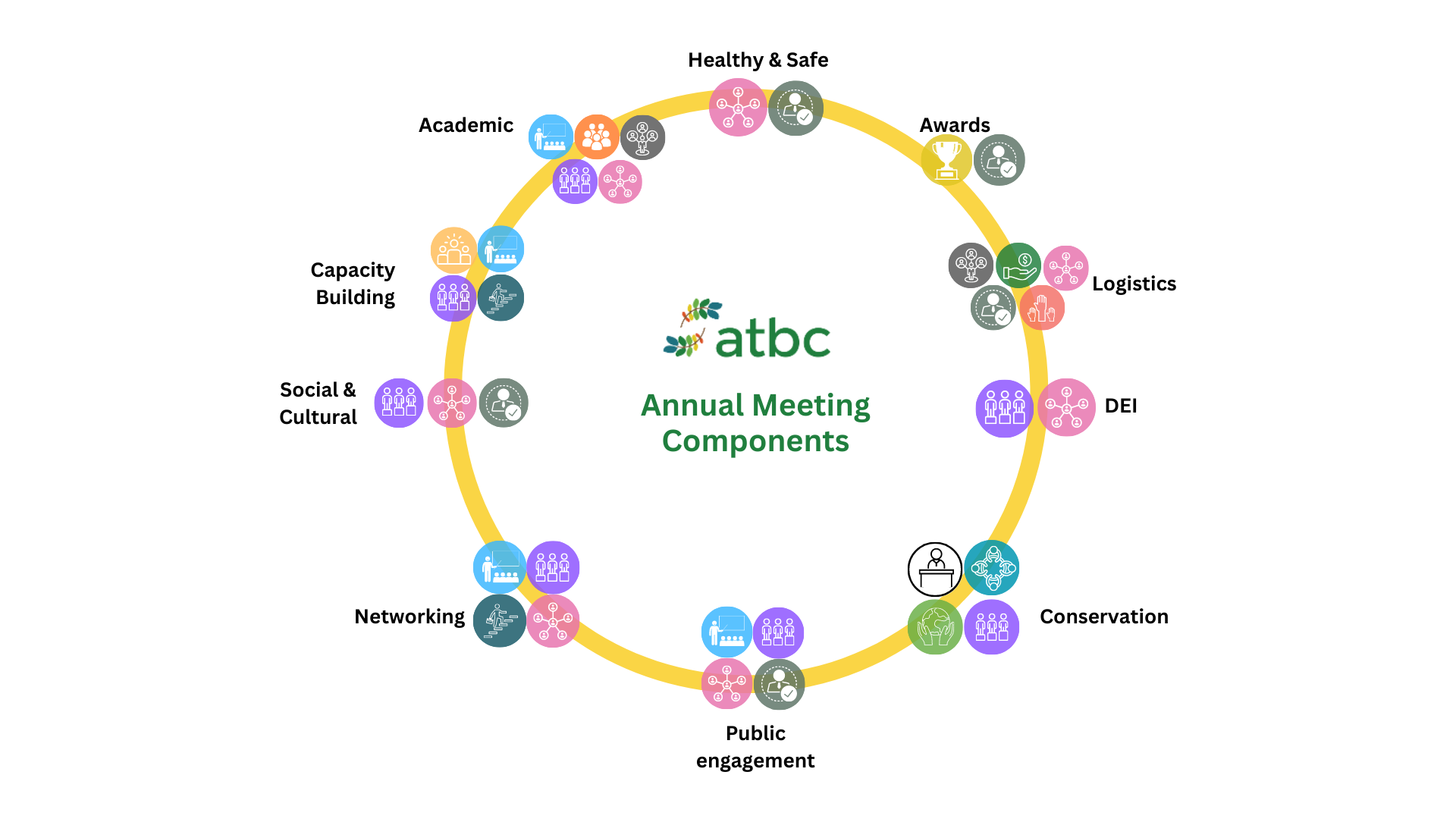
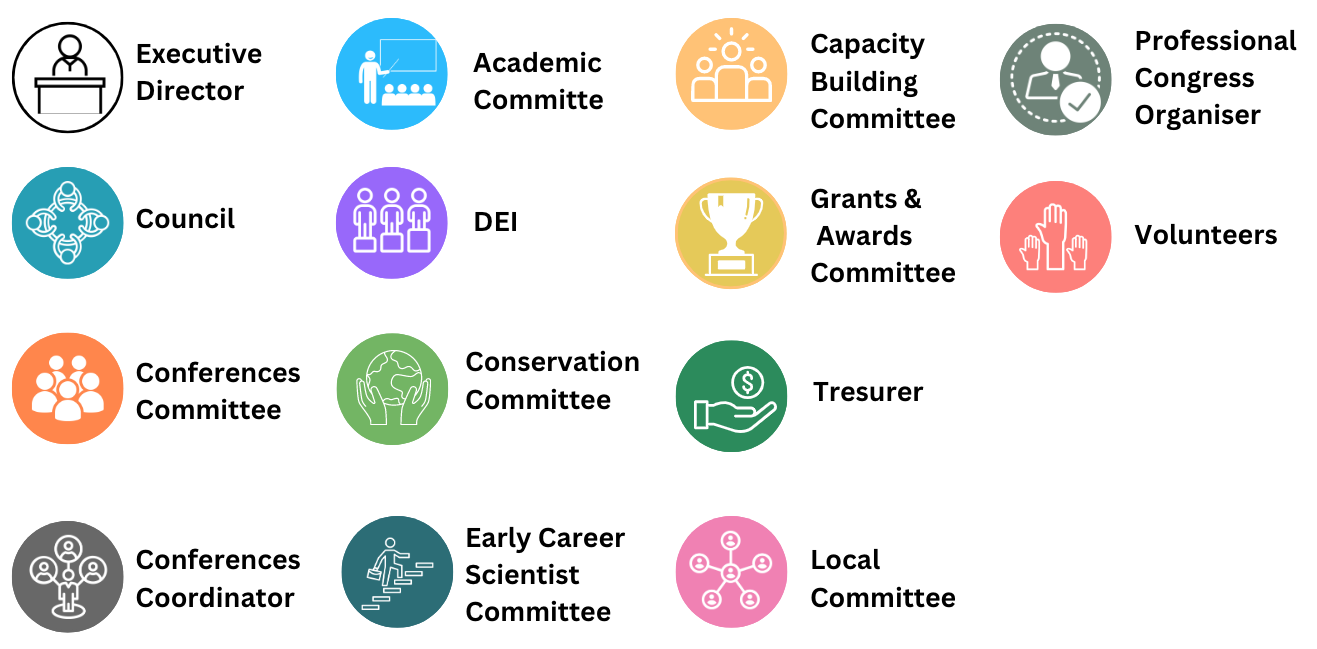

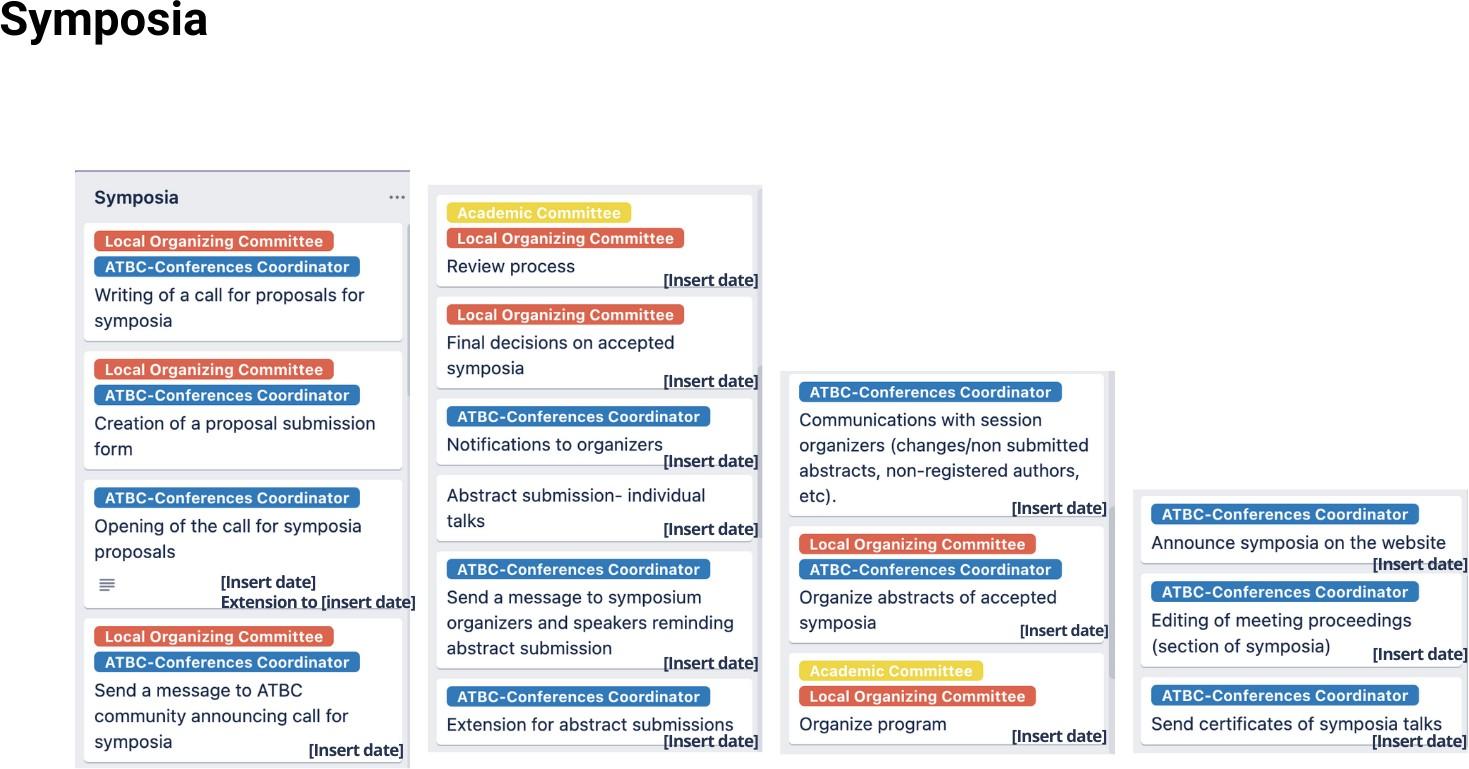
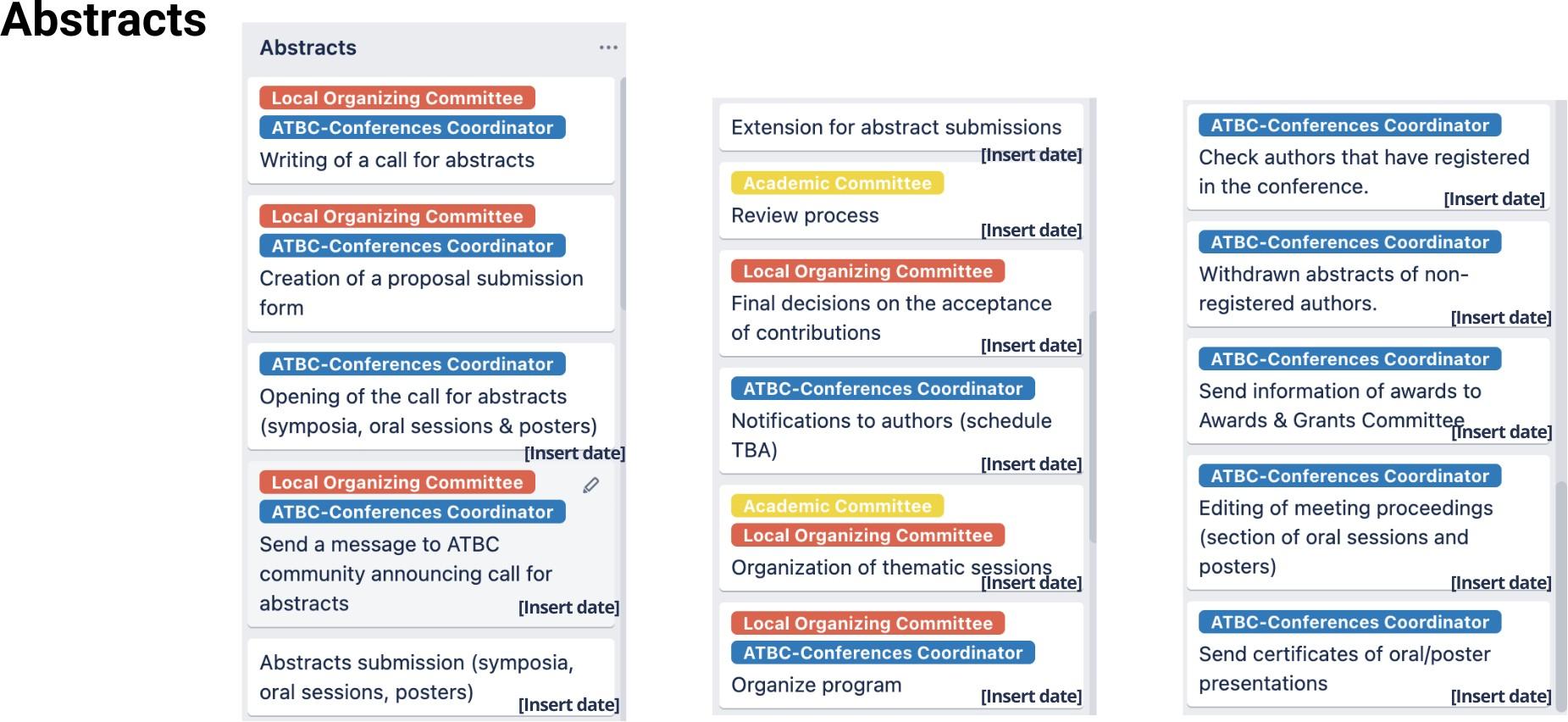
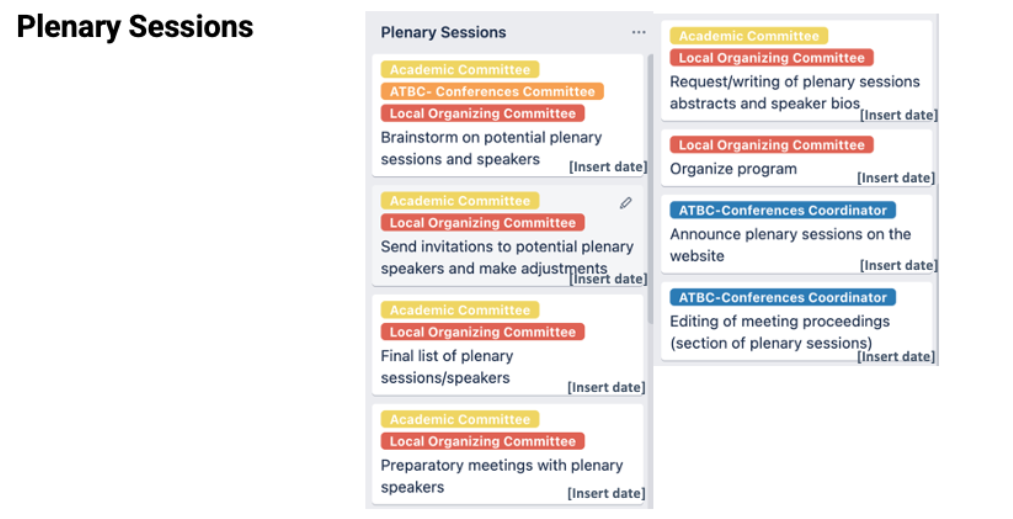
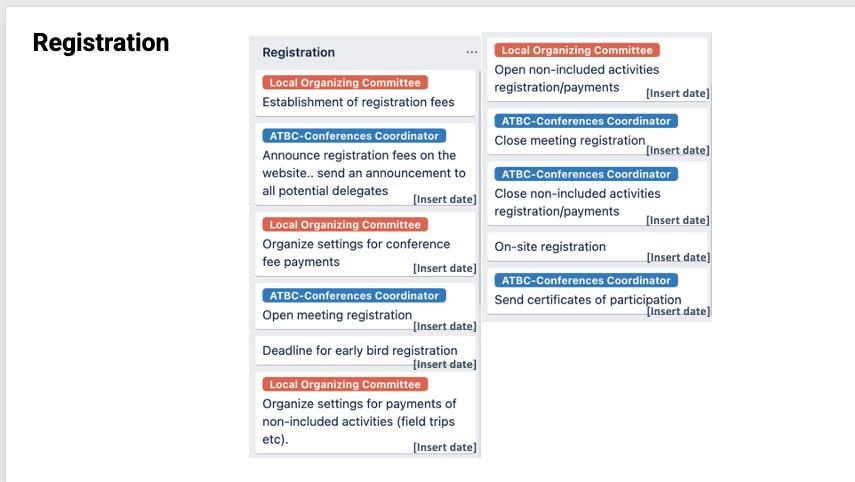
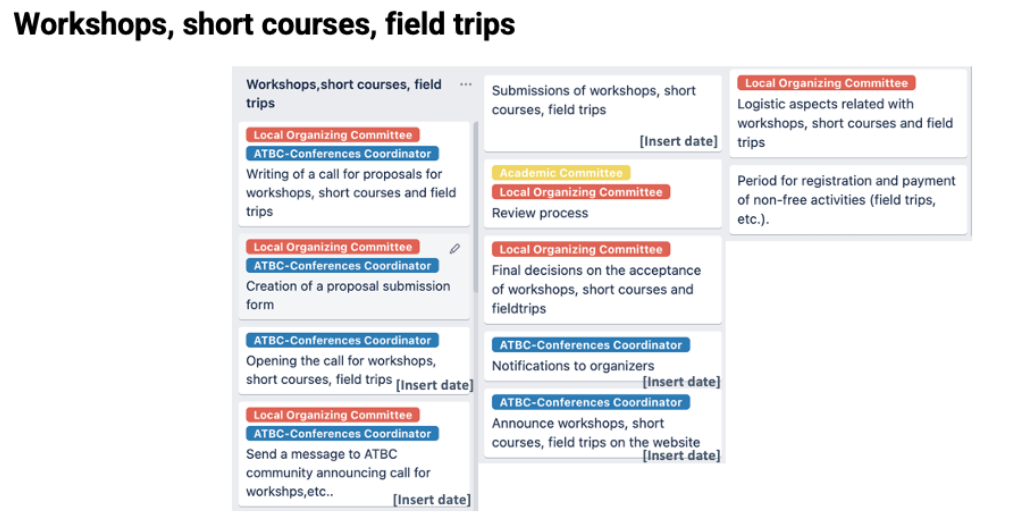
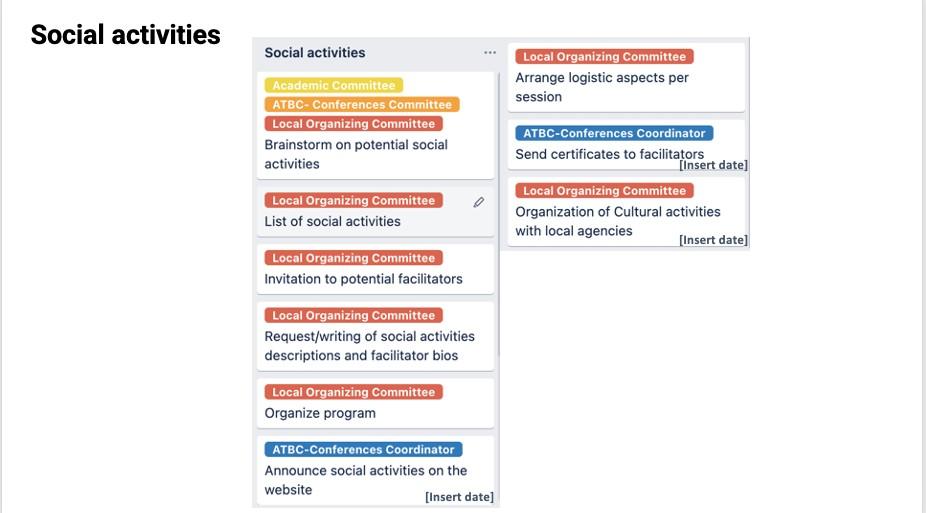
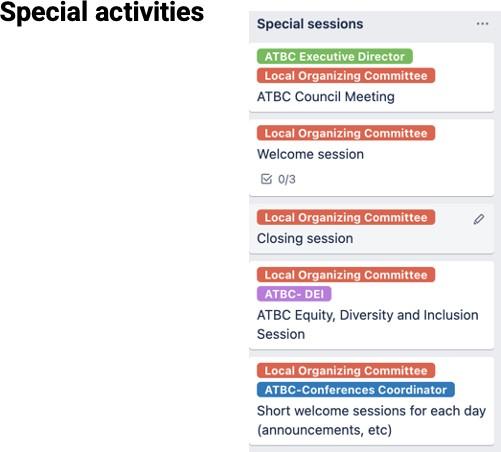
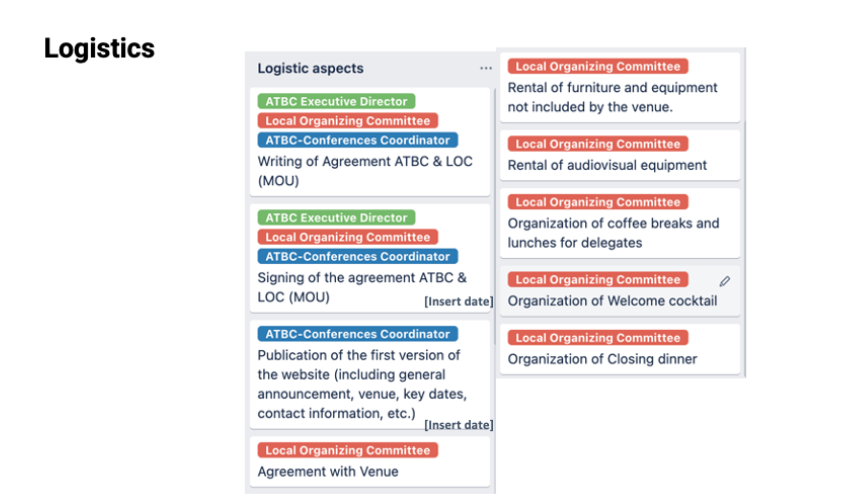
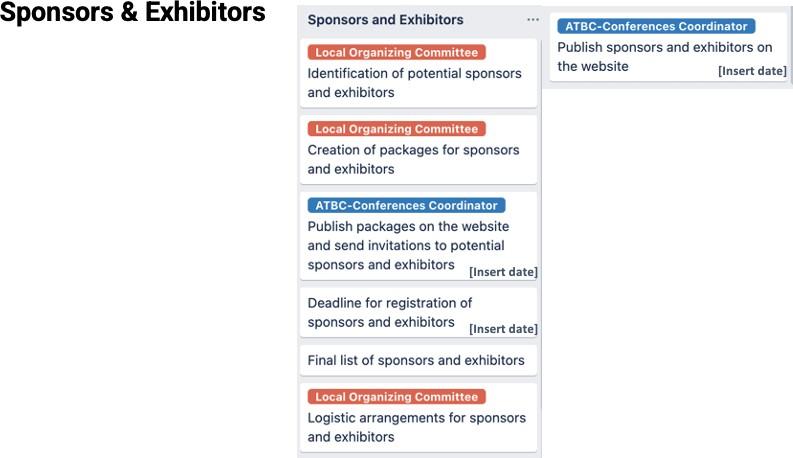
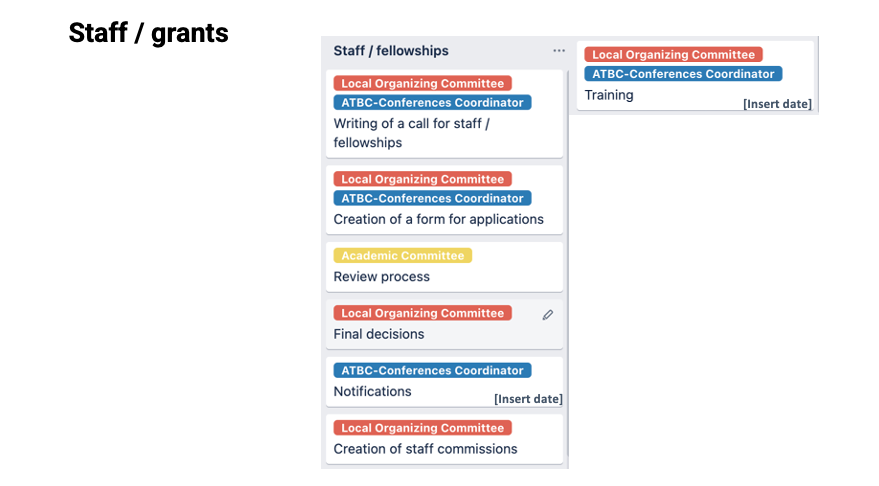
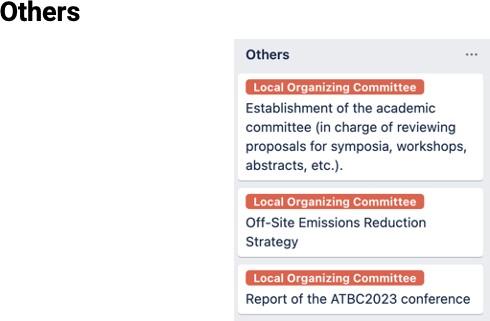
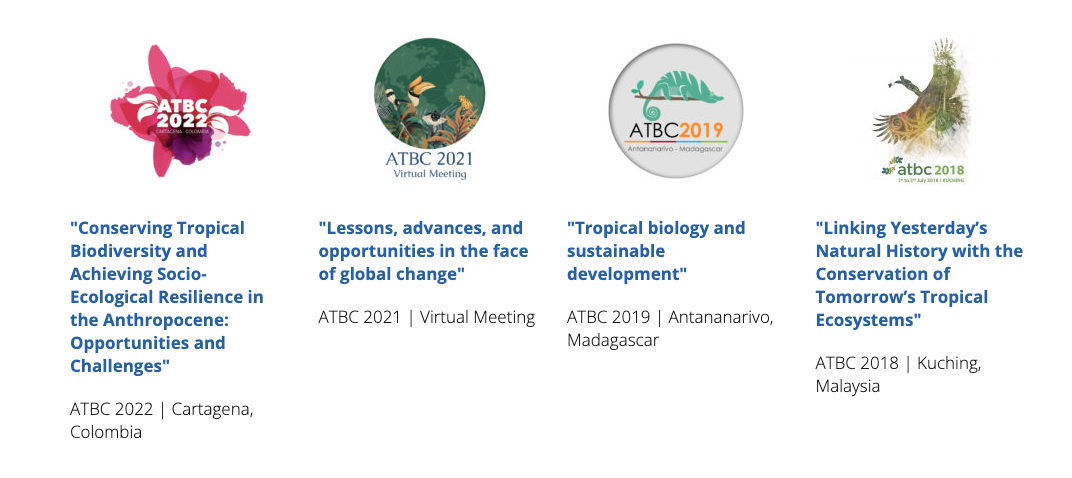
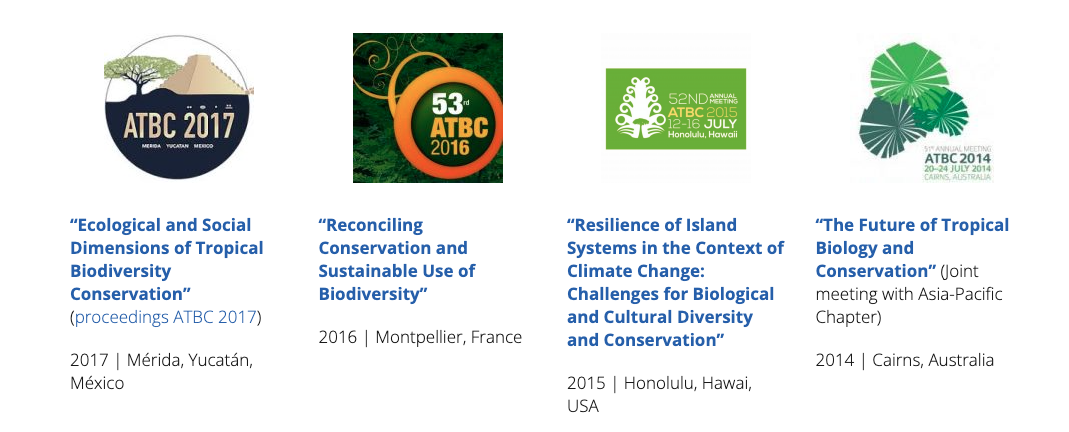
Social Sessions
Opening Ceremony
The ATBC annual meeting Opening Ceremony is a highlight of the conference program and sets the tone for the rest of the event. It may include a welcome speech by the conference chair or other conference organizers and authorities, as well as opening remarks and announcements about the conference program. The goal of the opening ceremony is to provide a welcoming and engaging environment for attendees, and to set the stage for a successful and productive conference. In addition, It typically includes a plenary session, which is a highly anticipated and prestigious or provocative presentation/session. The ceremony is typically held in the evening on the first day of the meeting, and should be followed by a Welcome Mixer.
Closing Ceremony
The Closing Ceremony marks the end of the ATBC annual meeting. During this event, attendees have the opportunity to reflect on the key highlights of the meeting, network with fellow attendees and presenters, and celebrate their achievements. This event is held on the final day of the meeting, in the evening. The Closing Ceremony can include a closing plenary talk, a report from the LOC, the reading of the ATBC Conservation Declaration, updates on ATBC activities, Biotropica news, announcements about future meetings, presentation of ATBC awards, recognition of the volunteers, passing of the baton to the chairs of the next ATBC Annual Meeting, etc. The Closing Ceremony provides a fitting conclusion to the meeting and helps to solidify the bonds that have been formed between attendees, presenters, and organizers. It should be followed by the Closing Banquet.